fashionbriefs
9:24in productionCh. 1 · Not costume. Workwear./ 9:24 · ceiling 15 min
Garments

Lederhosen

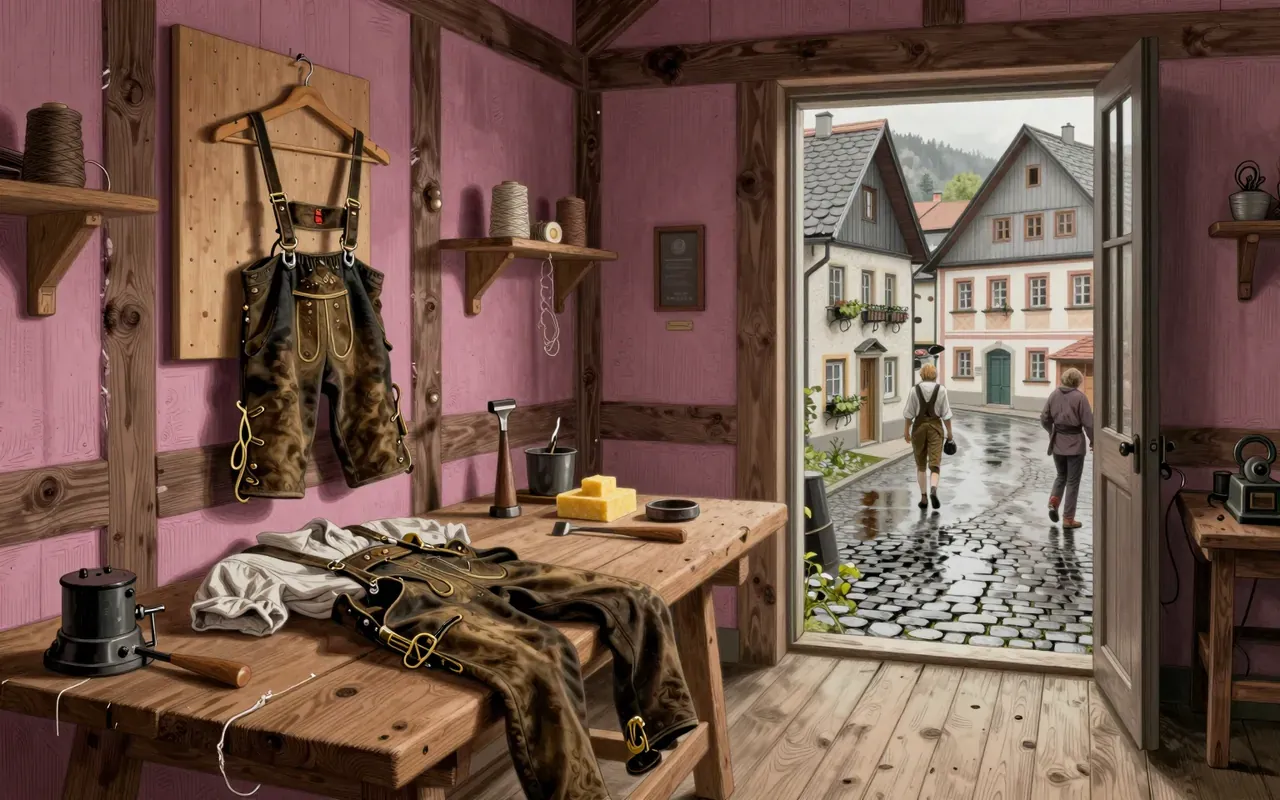
Lederhosen aren’t Bavarian tradition—they’re alpine workwear that got colonised by national myth.

Lederhosen are functional leather breeches developed for outdoor labour in the late Middle Ages. They were worn across Europe—not just Bavaria—with regional variations. The above-knee cut and drop front responded directly to alpine terrain and physical work. Their later association with Bavarian identity obscures their pan-European utility and the 19th-century fashion export that cemented the myth.

Chapters & takeaways4
  1. 0:58
    Not costume. Workwear.

    They began as durable workwear—not costume—for people doing hard physical labour.

  2. 2:15
    Alpine function, not Bavarian origin

    They were worn across Europe, but the above-knee cut thrived where steep slopes demanded mobility.

  3. 3:43
    A Bavarian invention, then a French trend

    The drop front may be Bavarian—but its fame came from French fashion labels calling it à la bavaroise.

  4. 5:52
    Above-knee wasn’t ceremonial—it was standard

    The everyday version was above-knee; the first written record of that cut comes from Tyrol in 1835.

Worth your time?

Yes. Wear the whole thing.

4/ 5
What works
  • culture/fashion
  • culture/society
What does not
  • culture/arts
  • culture/literature
  • culture/movements-and-scenes
  • culture/photography
Wear it if
  • designers
  • historians of material culture
  • people who question national dress narratives
Skip it if
  • fans of folkloric pageantry without critical context
  • those seeking aesthetic inspiration alone
The written brief1 min read

What the thing is

Lederhosen are leather breeches, traditionally cut above the knee, with a flap-front closure, made for outdoor physical work.

Where it came from

They originated in the late Middle Ages. Workers across Europe wore them—especially in the Austrian and Bavarian Alps—but their functional form emerged from the demands of alpine terrain and labour.

What it gets right

It solves a real problem: durable, mobile legwear for steep alpine terrain. The above-knee cut and drop front were practical responses to labour—not aesthetics.

What it gets wrong

It pretends to be Bavarian. It was worn across Europe by riders and hunters; Bavaria merely popularised one feature—the drop front—and exported it as fashion.

Why it matters now

They expose how utility gets rewritten as heritage, and how regional specificity dissolves under tourism, nationalism, and mass reproduction.

Is it worth your time

Yes—if you care about how functional clothing becomes symbolic, and why regional workwear gets flattened into national costume.
Same rail · Garments4 of 66
10:13
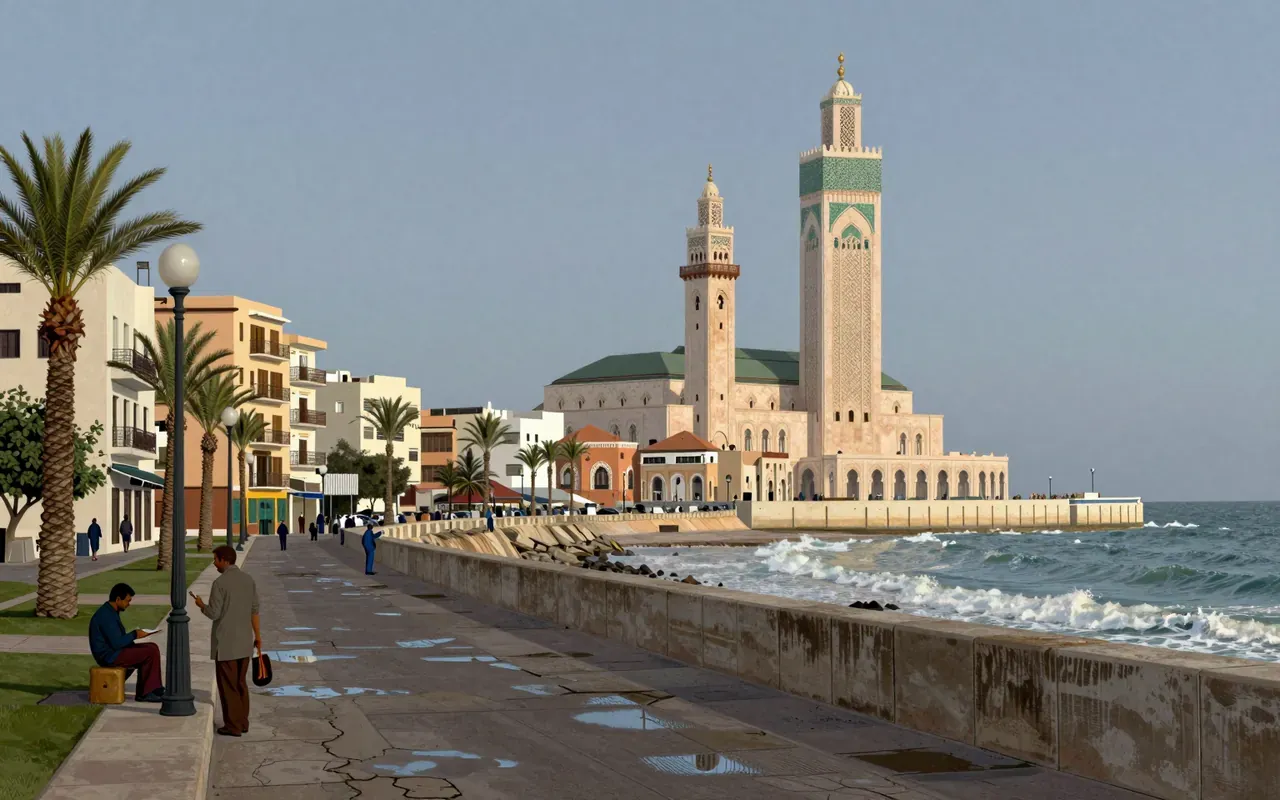
CasablancaCasablanca is a city. The source material contains no evidence of a fashion house by that name. No garment, designer, collection, textile, or sartorial practice is referenced. All claims pertain to geography, finance, industry, and infrastructure.
9:05
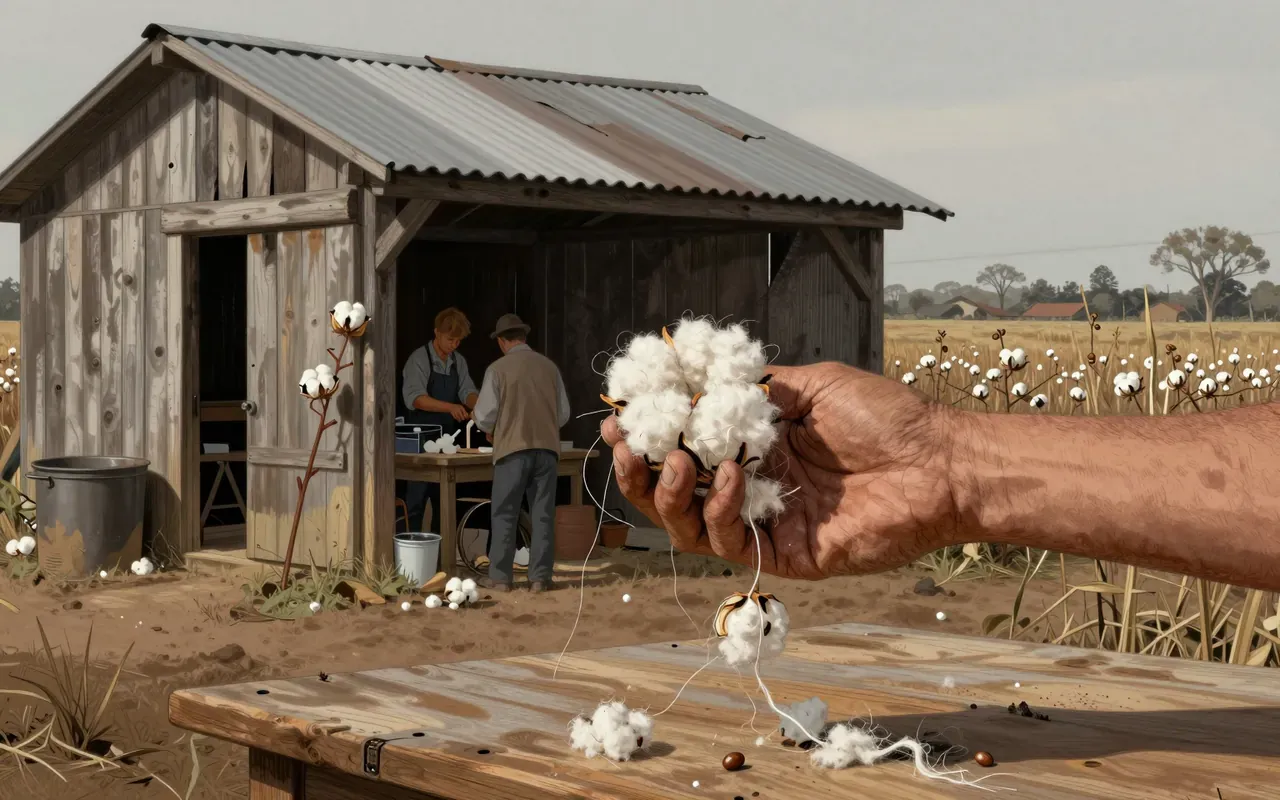
CottonCotton is a naturally occurring, soft, fluffy staple fiber derived from the bolls of Gossypium plants—shrubs native to tropical and subtropical regions across the Americas, Africa (including Egypt), and India. It is nearly pure cellulose, with minor waxes, fats, pectins, and water, and its bolls aid seed dispersal. Domesticated independently in both Old and New Worlds, cotton has been used for textiles since prehistoric times, with archaeological evidence from Peru (7th–6th millennia BC) and Pakistan (6th millennium BC). It is most commonly spun into yarn or thread to produce soft, breathable, durable fabrics.
9:48
DistressingDistressing is a surface-altering technique used on furniture and instruments to mimic age. It relies on controlled destruction of finishes — sanding, stripping, chiselling — to reveal substrate and layer history. It works best on solid pine. It does not occur on garments. It signals curated history, not lived time.
10:34
Dover Street MarketDover Street Market is a retail institution founded in 2004 by Rei Kawakubo and Adrian Joffe on Dover Street in Mayfair, London. It was conceived as a curated, art-integrated space inspired by Kensington Market, defined by Kawakubo’s phrase 'beautiful chaos'. It stocks Comme des Garçons and other selected brands, collaborates with Frieze Art Fair, Michael Hoppen Gallery and ICA, and relocated in 2016 to the former Burberry building on Haymarket.
Up next in Fashion

Petticoat

· 9:21

The petticoat isn’t one thing—it’s a linguistic smokescreen for centuries of shifting gender, class and cloth.

9:21