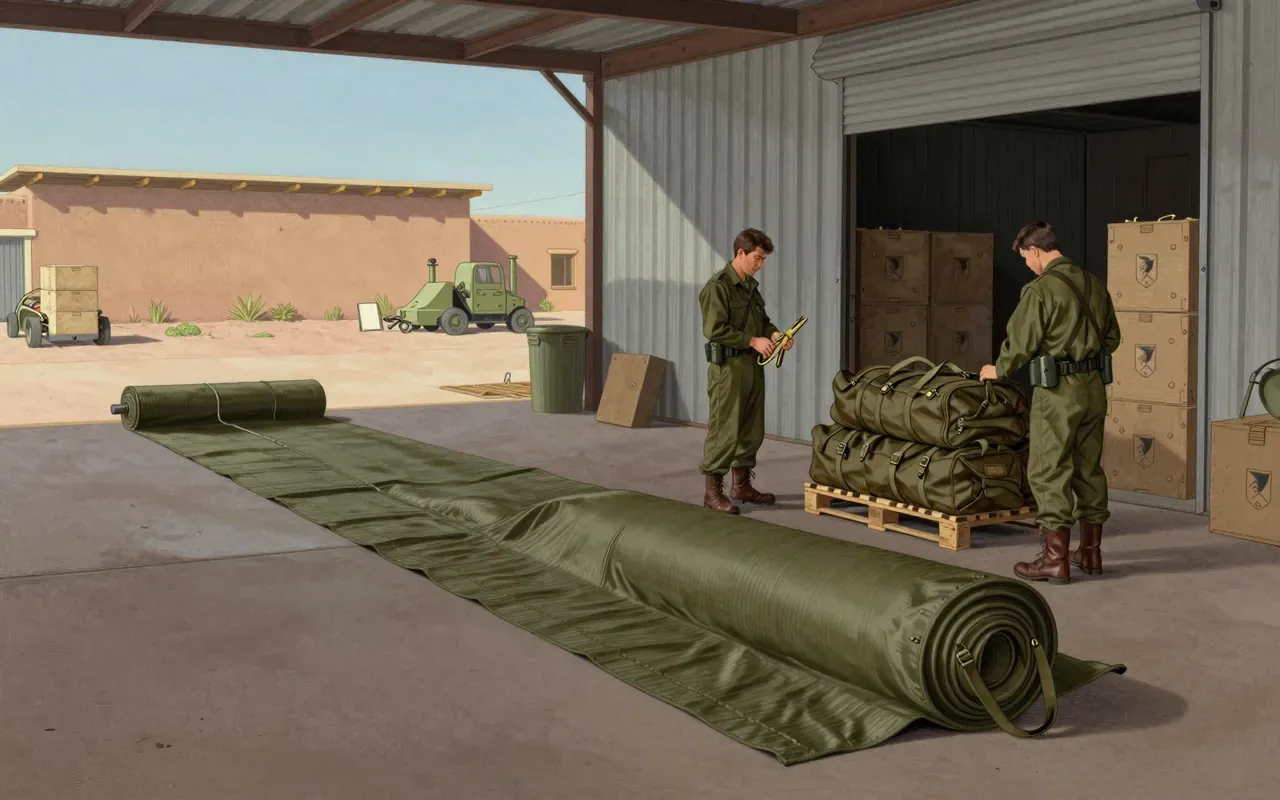
DuPont's 1929 tyre-cord rayon, turned into the tough fabric of motorcycle trousers and military packs.
Cordura is a synthetic fabric brand, not a garment. Developed by DuPont in 1929 as high-tenacity rayon for tire cords, it was engineered for strength under flex — not for wear, drape or comfort. Its adoption in luggage, military wear and motorcycle apparel follows directly from its calibrated resistance to abrasion and tear. It changed how textiles were specified: strength became a measurable, repeatable output, not an inherited trait. It serves users who value longevity over feel — and fails where softness, breathability or movement matter most.
Cordura began as a response to a rubber company’s demand for stronger tire cord — not as apparel fabric.
2:37
Engineered, not spun
Its strength came from roller tension, plasticised finish and adhesive chemistry — not fibre origin.
4:13
As strong as steel
In 1948, DuPont claimed it matched mild steel in tensile strength while surviving repeated flexing.
5:52
Brand, not material
It started as rayon, became nylon, and remains a brand — not a fibre type or weave.
Worth your time?
Yes. Wear the whole thing.
4/ 5
What works
delivers consistent tensile strength
withstands friction and repeated flexing
performs across disparate applications
What does not
breathe like cotton
soften with wear
drape like wool
insulate like down
Wear it if
motorcyclists
soldiers
rucksack makers
Skip it if
tailors
couturiers
anyone prioritising silhouette or thermal regulation
The written brief1 min read
What the garment is and where it came from
Cordura is not a garment. It is a branded synthetic fabric, developed by DuPont in 1929 as high-tenacity rayon for tire cords, later rebranded for nylon.
How it works, in terms someone would actually use
Cordura resists abrasion and tearing through high-tenacity filament construction — not by thickness, but by engineered tension and finish.
What it gets right
It delivers consistent tensile strength across varied applications — from motorcycle trousers to military packs — because its performance is built into the filament, not added after weaving.
What it does not
It does not breathe like cotton. It does not soften with wear. It does not drape like wool. It does not insulate like down.
What it changed
It shifted textile engineering from natural-fibre adaptation to synthetic-fibre specification: strength became a design parameter, not a byproduct.
Who it is for, and who it is not
It is for people who prioritise durability over comfort: motorcyclists, soldiers, rucksack makers, workwear designers. It is not for tailors, couturiers or anyone whose priority is silhouette, texture or thermal regulation.
Is it worth your time
Yes, if you need fabric that withstands friction, flexing and repeated stress — not if you need drape, breathability or quiet movement.