What the garment is and where it came from
A handmade trunk, not an accessory. Founded in Paris in 1854. Built for long-haul travel by rail and sea.
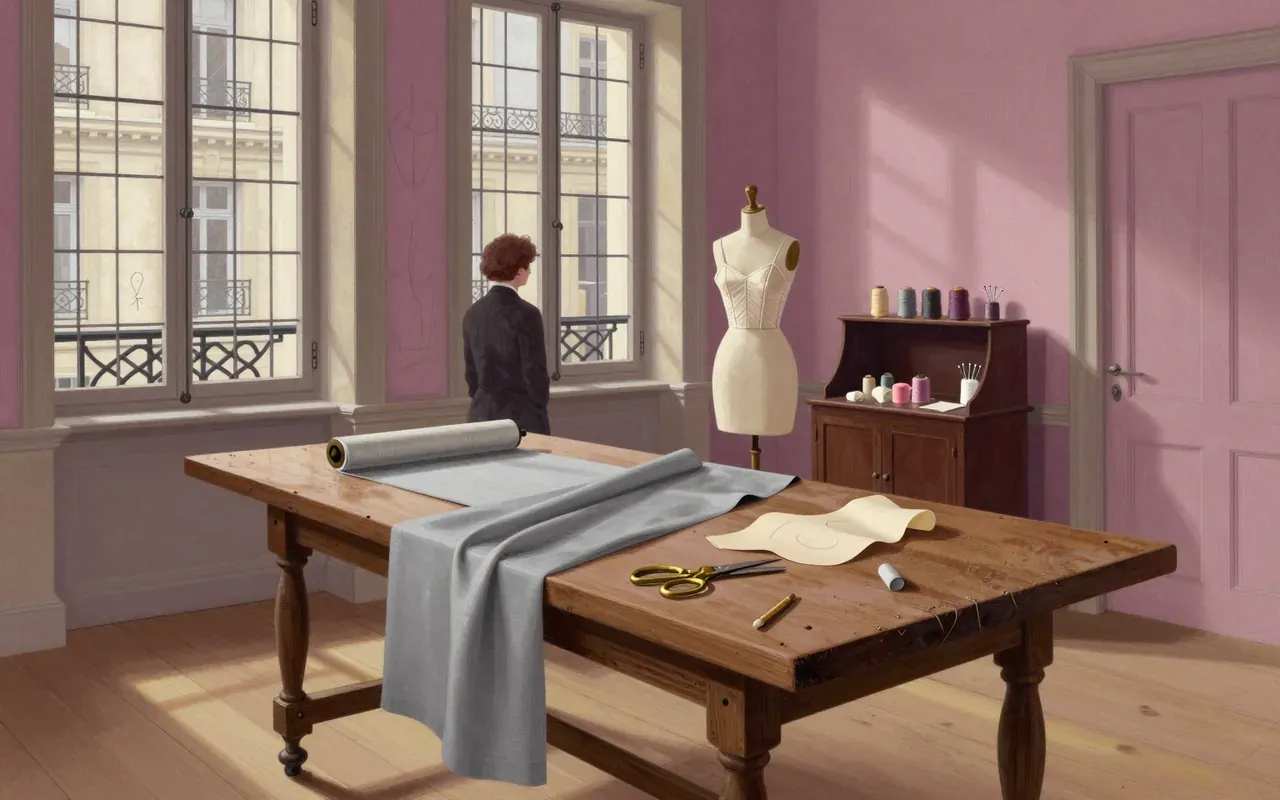
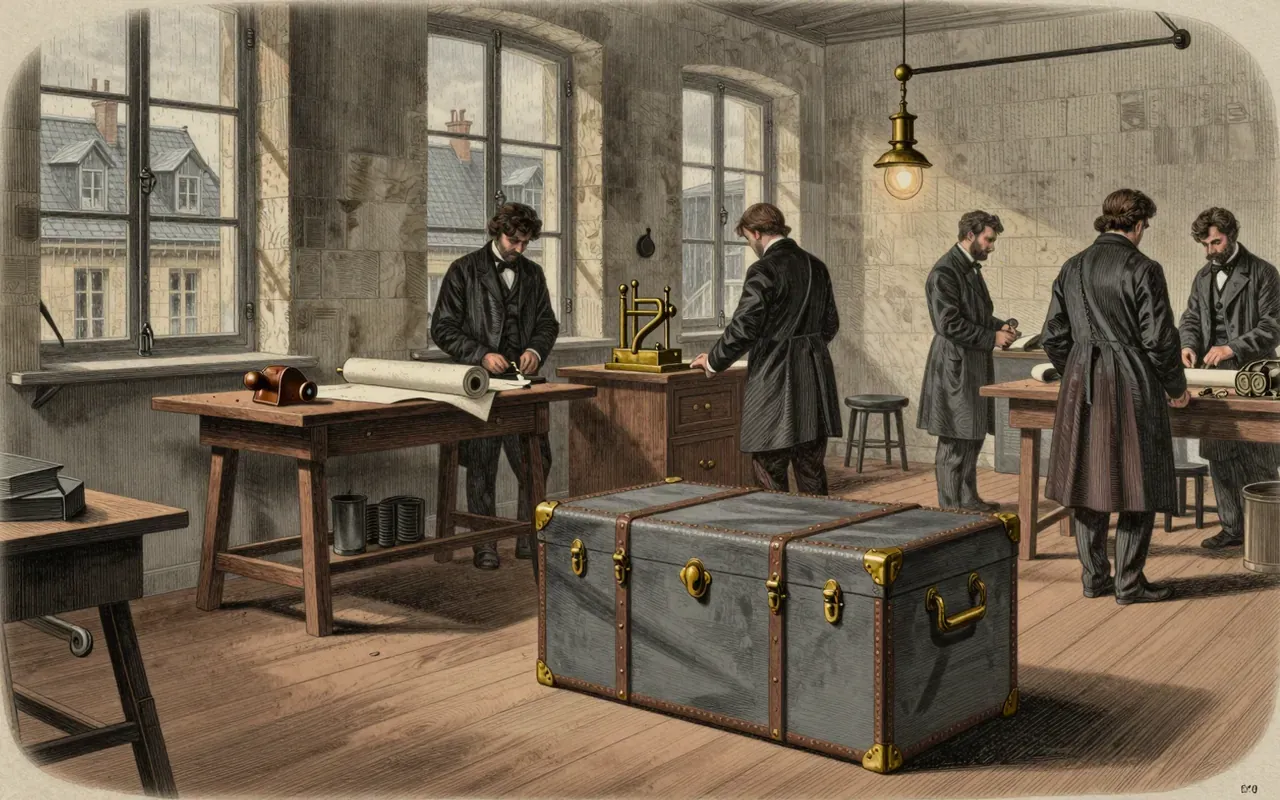
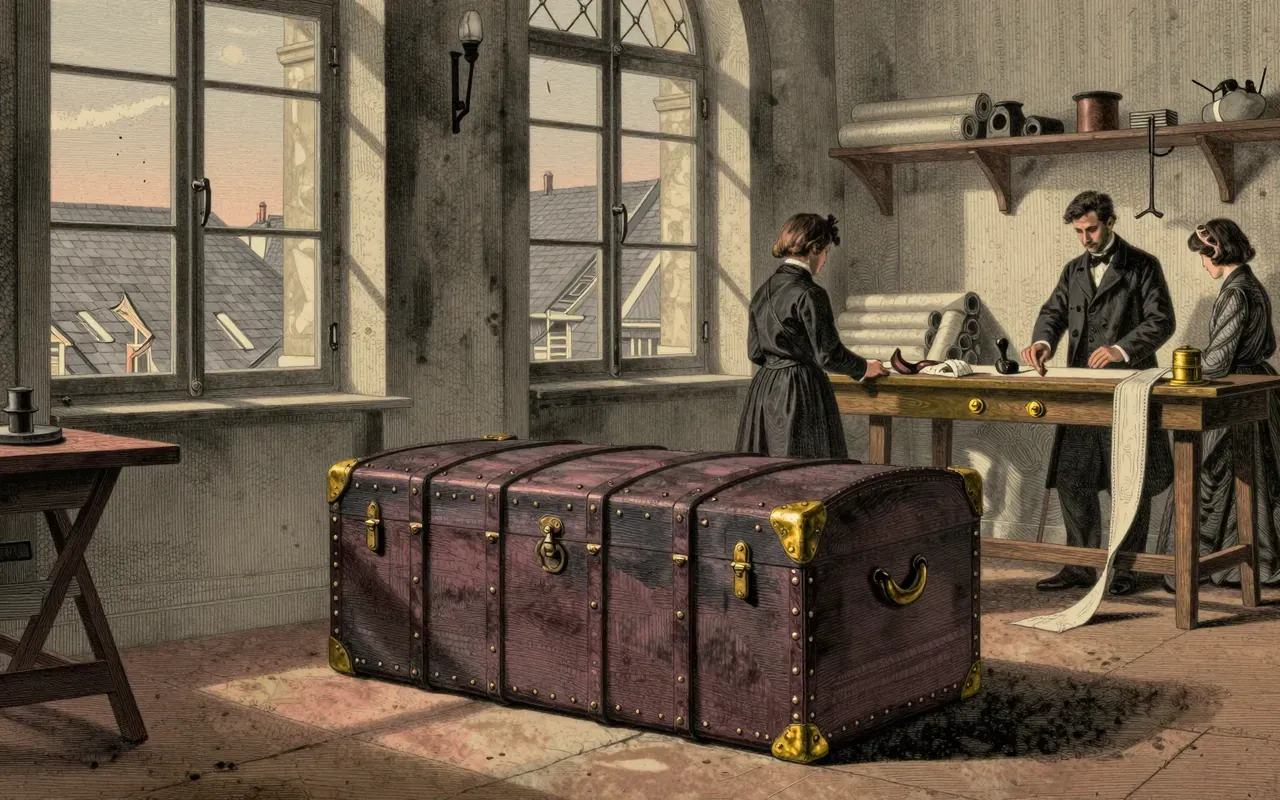
The house started at Rue Neuve des Capucines in Paris, and its first move was a change of shape. Louis Vuitton had seen that the H. J. Cave Osilite trunk could be stacked. Trunks of the time had rounded tops, generally to shed water, which meant they could not be stacked. In 1858 he introduced flat-topped trunks in grey Trianon canvas, described as lightweight and airtight, and the flat lid is what let them be piled on top of one another for a voyage.
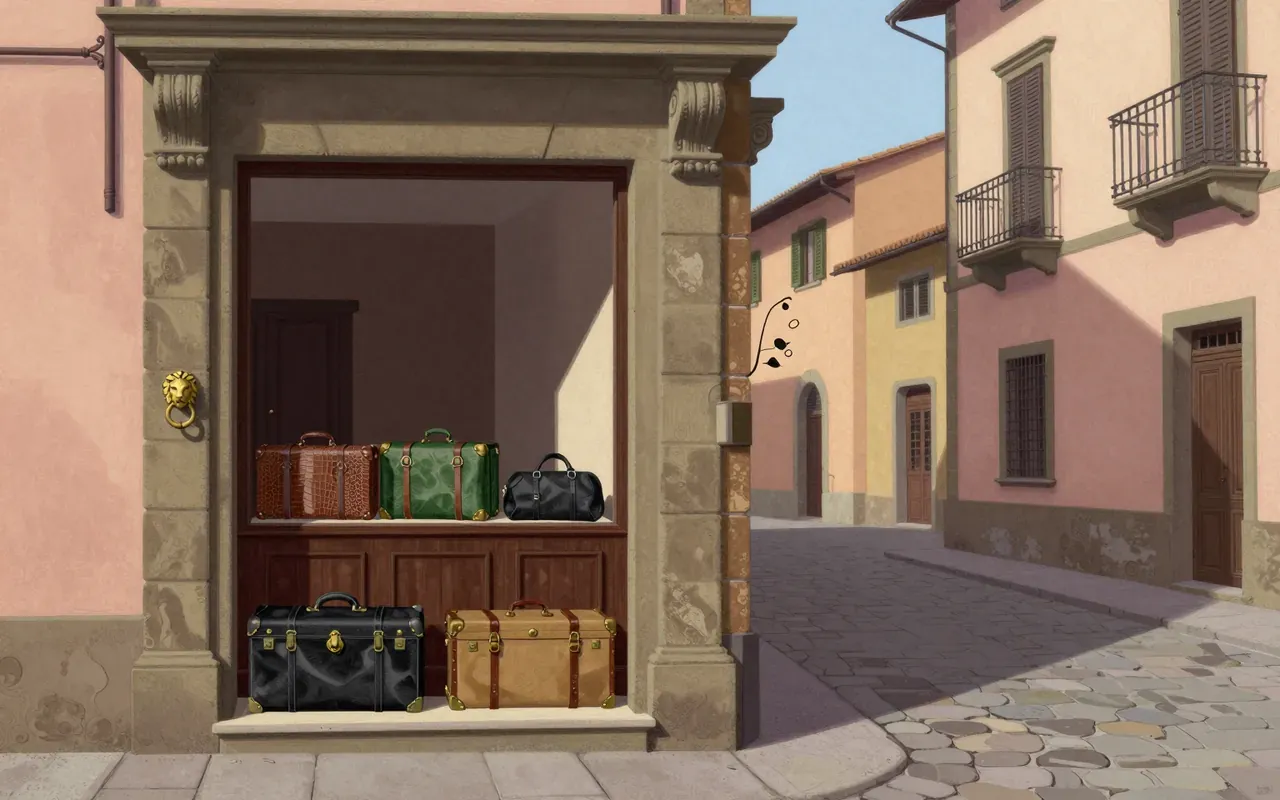
The bags came later. A smaller piece, the Steamer Bag, arrived in 1901, designed to be kept inside Vuitton trunks. The Keepall was introduced in 1930, and the Noé followed in 1932, originally made for champagne vintners to carry bottles.
How it works, in terms someone would actually use
It holds luggage securely across continents. The poplar frame resists warping. The brass locks open with one custom key. The canvas sheds rain and abrasion.
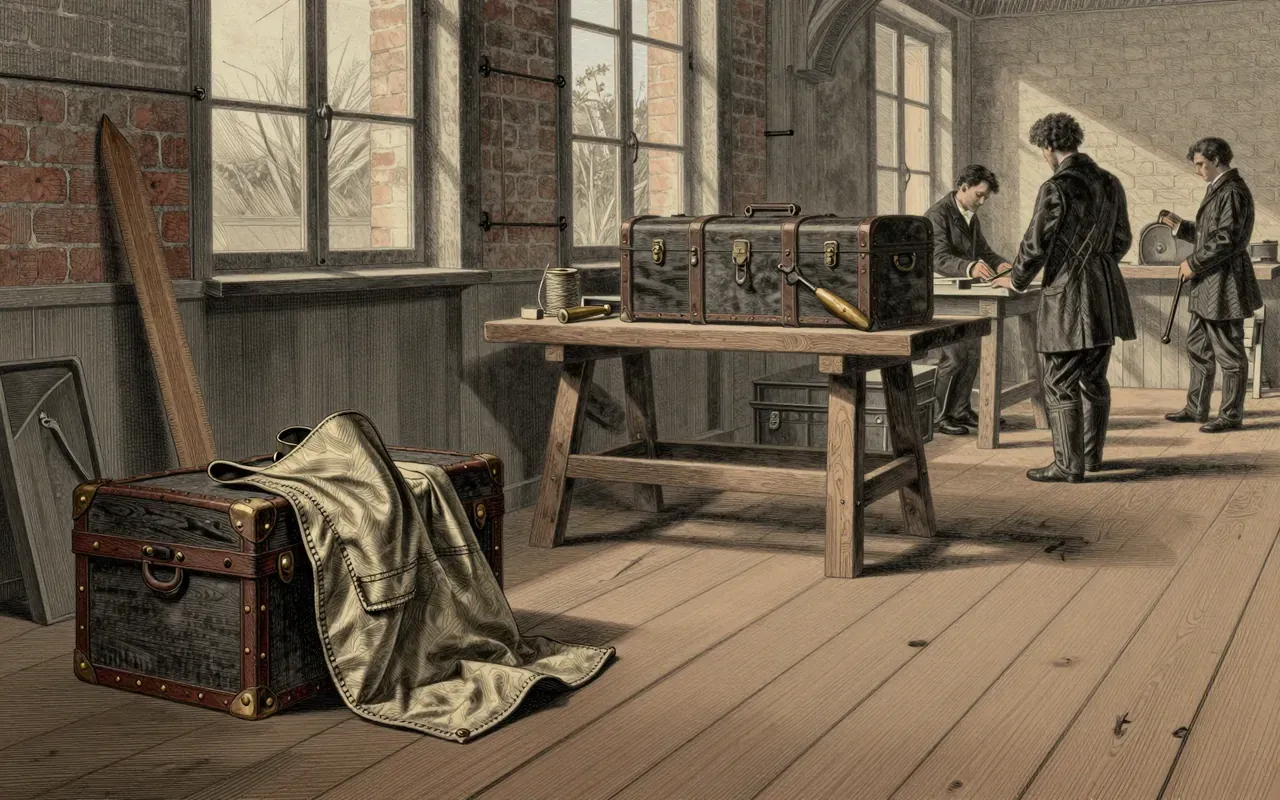
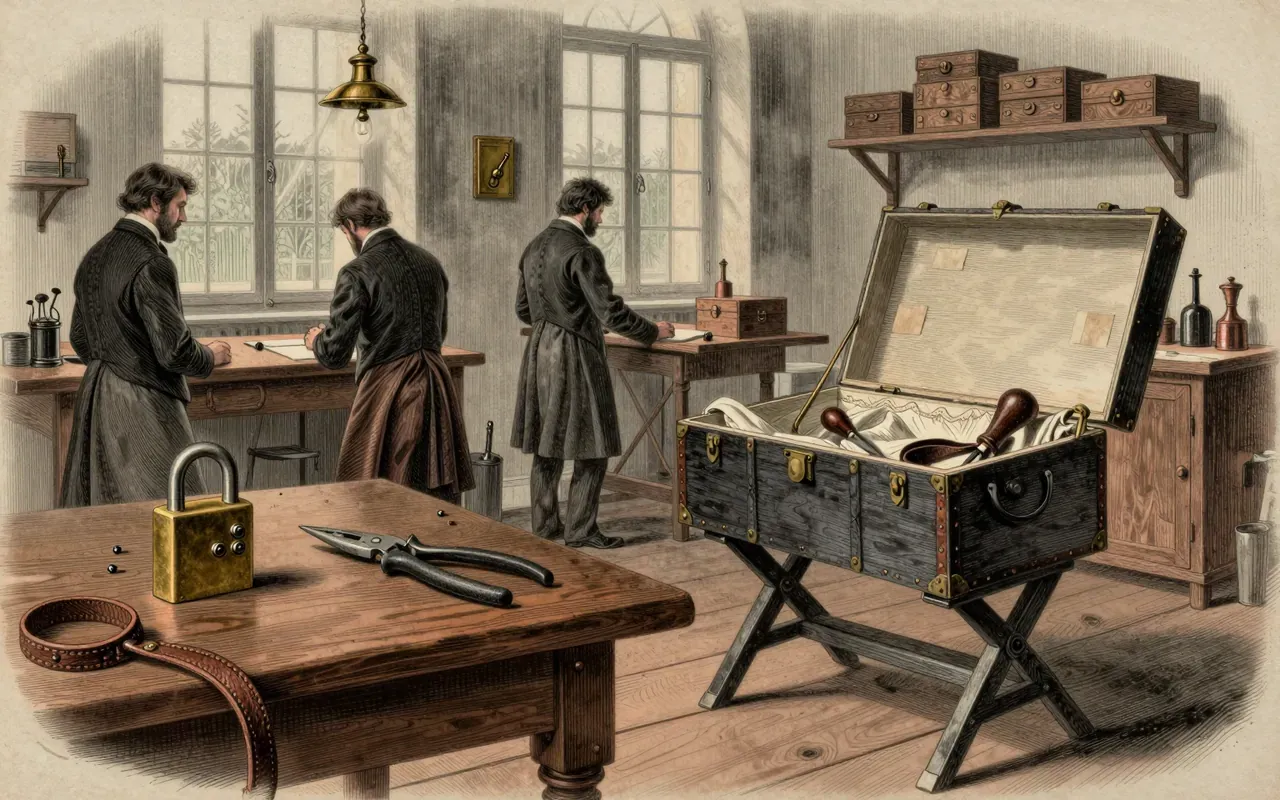
A trunk is built by craftsmen who line up the leather and canvas and tap in the tiny nails one by one, then fit the five-letter pick-proof brass lock with its individual handmade key; the design lets a traveller carry one key for all of their luggage. The wooden frame is made of 30-year-old poplar that has been left to dry for at least four years. Each trunk carries a serial number and can take up to 60 hours to make, and a suitcase as many as 15 hours.
What it gets right
The aged poplar frame absorbs shock without splintering. Hand-nailing secures canvas to leather without seam stress. The monogram canvas is both identifier and barrier.
The surfaces were also a defence against copying. Many luggage makers imitated Vuitton’s style, so in 1876 he changed the Trianon design to beige-and-brown stripes to protect against duplication, and in 1888 he created the Damier pattern, which carried the words “marque L. Vuitton déposée”, meaning “L. Vuitton registered trademark”. In 1896 the house launched the Monogram canvas and took out worldwide patents on it. Its quatrefoils and flowers, like the LV monogram itself, drew on the late Victorian fashion for Japanese family crests (mon), and some motifs were inspired by the sword guards (tsuba) that Gaston-Louis Vuitton collected. The patents later proved successful in stopping counterfeiting.
What it does not
It does not prioritise lightness, speed of packing or modularity. It omits zips, wheels, internal dividers and removable linings.
What it changed
It replaced leather-covered wooden chests with flat-topped, stackable, weatherproof trunks built for rail and steamship travel.
Copying did not stop. Louis Vuitton is one of the most counterfeited brands in fashion, and the company puts approximately half of its communications budget towards countering counterfeits. It also controls distribution: until the 1980s Vuitton goods were widely sold in department stores such as Neiman Marcus and Saks Fifth Avenue, and today they are primarily sold in company-owned boutiques. In 1987 Louis Vuitton merged with Moët Hennessy to create LVMH, of which it is now a subsidiary.
Who it is for, and who it is not
For travellers who carry objects worth serial-numbering and guarding with five-letter brass locks. Not for commuters, students or digital nomads.
Is it worth your time
Yes—if you need a trunk that outlives its owner, not a bag that signals status in the first week.