fashionbriefs
8:00in productionCh. 1 · Monogram as warranty/ 8:00 · ceiling 15 min
Houses & movements · Accessories

Louis Vuitton

1854

A trunk is not a bag—it’s a sovereign unit of travel, and Louis Vuitton built the first one that refused to break.

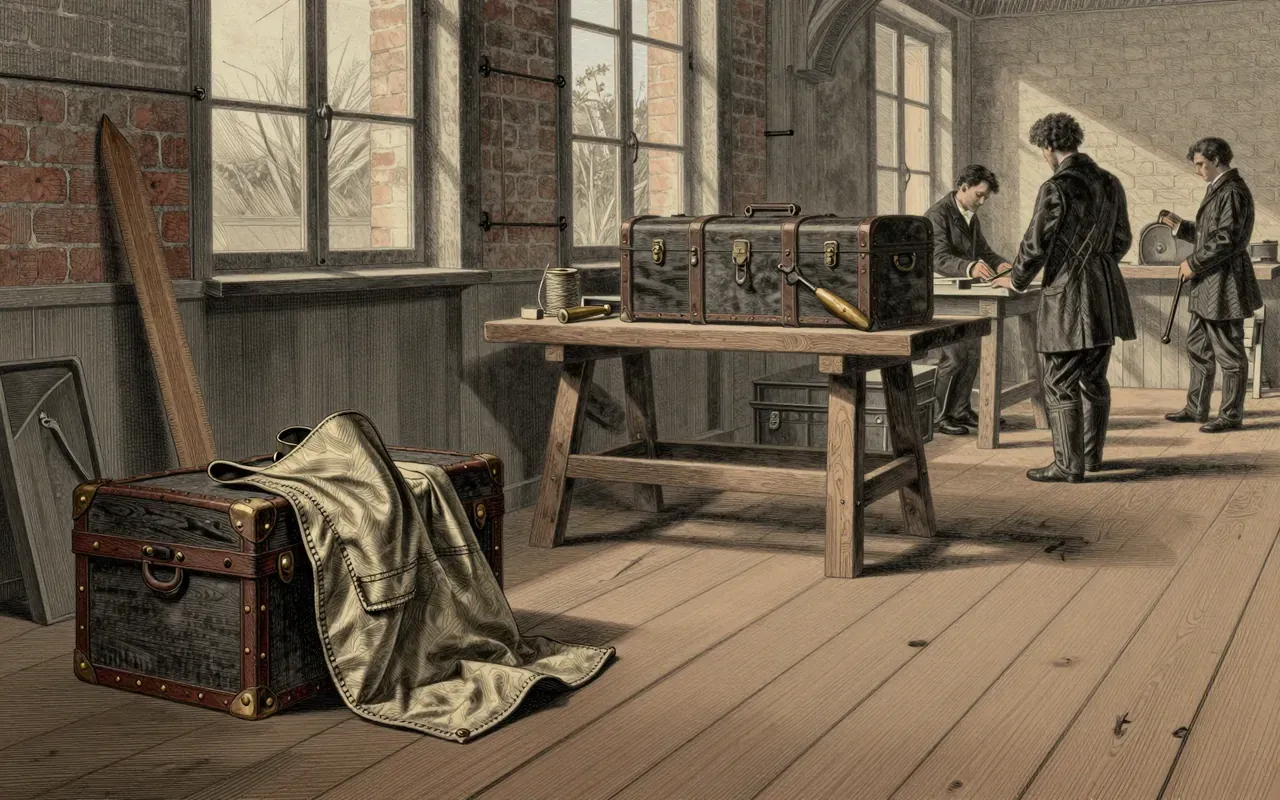
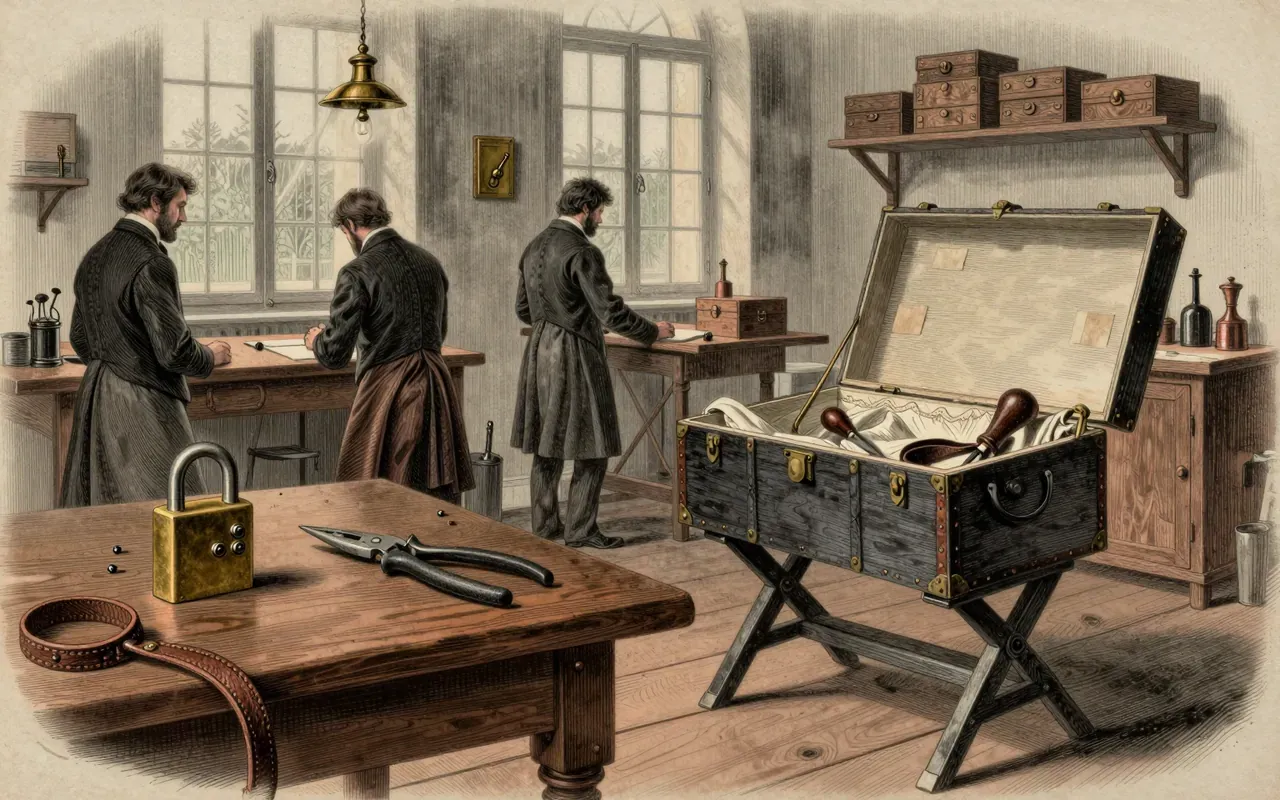
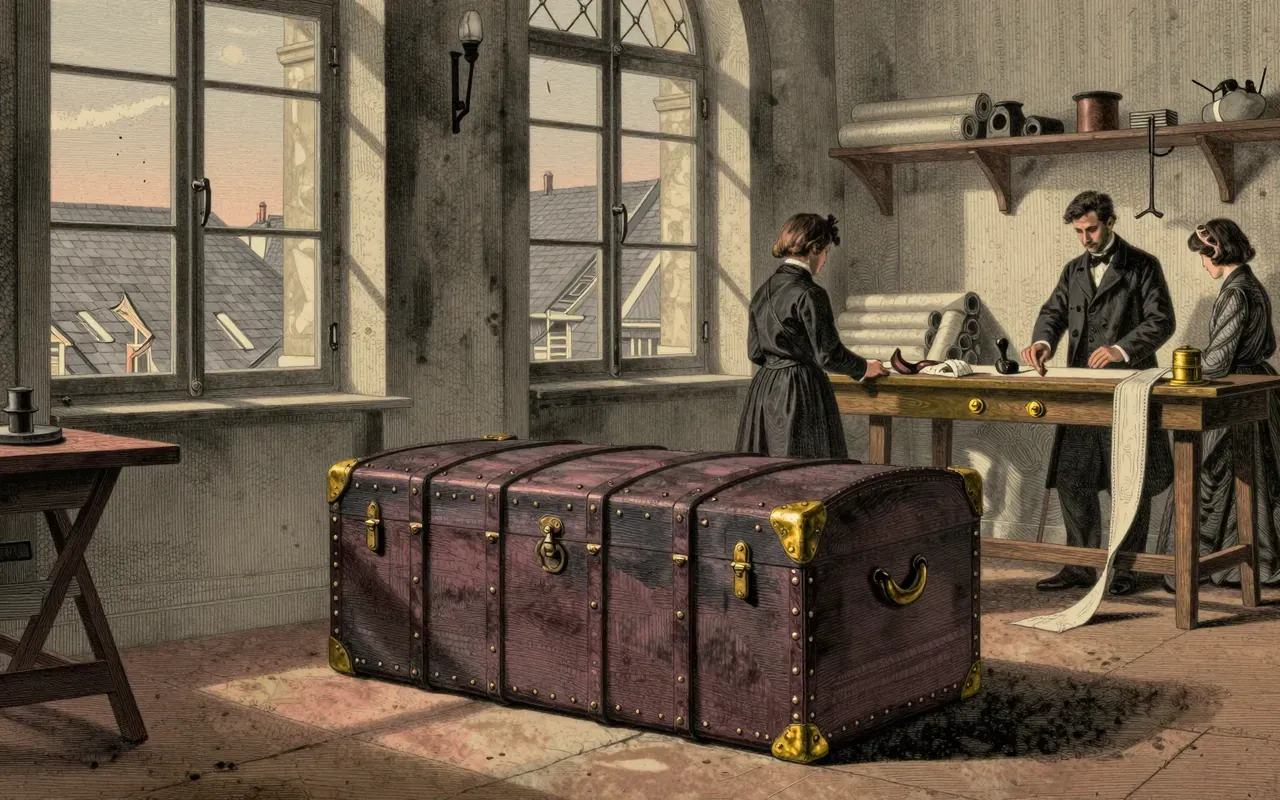
Louis Vuitton is not a handbag brand. It is a trunk-maker founded in 1854. Its core object is a rigid, stackable, waterproof container built from aged poplar, covered in monogrammed canvas, locked with brass, and keyed to a single handmade duplicate. It was made for rail and steamship travel. It remains unchanged in method: hand assembly, serial numbering, material specificity. Its monogram is forensic, not ornamental. Its value is structural, not symbolic.

Chapters & takeaways4
  1. 0:53
    Monogram as warranty

    The LV monogram and brown Damier canvas were tools of identification, not decoration—introduced in the late 19th century to stop theft and prove provenance.

  2. 2:17
    Handmade, not hand-finished

    Each trunk takes up to 60 hours because every nail is tapped in by hand, every lock fitted individually, and every key forged to match.

  3. 3:41
    Wood before canvas

    Poplar wood aged 30 years and dried four more is non-negotiable—the frame must be stable, light, and warp-resistant before a single stitch is made.

  4. 5:24
    Eponymous, not decorative

    The LV initials appear on everything—not as branding, but as a signature of origin, repeated across every product since inception.

Worth your time?

Yes. Wear the whole thing.

4.5/ 5
What works
  • stacks cleanly
  • resists water and abrasion
  • carries serial identity
What does not
  • adapt to modern air travel
  • prioritise weight reduction
  • offer anonymity
Wear it if
  • owners of multiple luggage units
  • collectors of functional antiques
  • those who treat objects as infrastructure
Skip it if
  • backpackers
  • digital nomads
  • minimalists
The written brief1 min read

What the garment is and where it came from

Louis Vuitton is a French luxury fashion house founded in 1854 in Paris. It began with handcrafted trunks—not bags, not accessories, but travel containers built for durability and uniformity.

How it works, in terms someone would actually use

It locks shut with a solid brass pick-proof lock. It opens with a single handmade key. It carries luggage across continents without warping. Its canvas resists scuffs and rain. Its poplar frame holds shape under weight and time.

What it gets right

It uses aged poplar dried four years. It assembles by hand with brass, leather, and canvas. It assigns each trunk a serial number. It gives one key for all luggage.

What it does not

It does not fold. It does not weigh less than 20kg when empty. It does not adapt to airline carry-on dimensions. It does not hide its monogram.

What it changed

It replaced leather-covered wooden chests with flat-topped, stackable, waterproof trunks built for railways and steamships.

Who it is for, and who it is not

It is for people who own multiple pieces of luggage and expect them to function as a system. It is not for those who prioritise lightness, discretion, or digital integration.

Is it worth your time

Yes—if you need a trunk that lasts longer than your passport, and you accept that its value lies in construction, not convenience.
Same rail · Houses & movements4 of 76
9:42
Louis Vuitton1854Louis Vuitton is a French luxury house founded in 1854 in Paris, known for its handmade trunks using aged poplar frames, leather-and-canvas assembly, brass locks with custom keys, and signature brown Damier and Monogram canvas materials introduced in the late 19th century; all products bear the LV monogram.
9:07
GucciGuccio Gucci · 1921Gucci began as a Florentine leather shop in 1921, shaped by embargo, war and equestrian utility—not aspiration or artistry.
9:19
Goyard1853Goyard is a French trunk maker founded in 1853 in Paris, originating from Maison Morel and established by François Goyard. It evolved under successive generations—Edmond, Robert, and later Jean-Michel Signoles—with key developments including the creation of the Goyardine canvas by Edmond Goyard, patenting of a woven canvas by Robert Goyard in 1965, and continued craftsmanship in hand-made luggage using natural fiber canvases. The house maintains its historic address at 233, rue Saint-Honoré, and emphasizes bespoke production, monogramming, and heritage-driven innovation.
8:17
Martin MargielaMartin MargielaMaison Martin Margiela is a fashion house founded in 1988 in Paris through a collaborative venture with Jenny Meirens. Its debut show took place in fall 1989 at a derelict playground in a North African neighborhood on the outskirts of Paris. The show used an uneven runway and intentionally stumbling models to create a shocking public spectacle. The debut collection rejected contemporaneous extravagance in favour of ripped sleeves, frayed hems, and clumpy shoes. Local children hand-drew invitations in school art classes and sat in the front row to honour the community. The label’s trademark is a cloth badge numbered 0–23, attached with four small white tack stitches, exposed externally on unlined garments. Margiela consistently remained backstage and declined to take a bow after shows, distinguishing himself from peers. From 1988 onward, Margiela refused all formal interviews and photographic appearances.
Up next in Fashion

Reebok Classic

1983 · 8:34

A running shoe that refused to run—and won.

8:34