fashionbriefs
9:27in productionCh. 1 · Origin: Deck, not runway/ 9:27 · ceiling 15 min
Outerwear

Pea coat

A pea coat isn’t versatile—it’s a 300-year-old solution to one problem: staying upright on a pitching deck in gale-force wind.

A pea coat is a naval-origin outer garment defined by its short length, broad lapels, double-breasted front, large buttons in two rows, and vertical or slash pockets; historically made from navy-coloured heavy wool—specifically Kersey wool in the twentieth century, later supplanted by Melton cloth—and worn by sailors and officers across European and American navies since at least the early 1700s.

Chapters & takeaways4
  1. 0:53
    Origin: Deck, not runway

    It began as naval kit—not fashion—and has never stopped being defined by its shipboard use.

  2. 2:47
    Construction: No ornament, only armour

    Every detail—the short hem, broad lapels, double-breasted front—is calibrated for wind, water and rope work.

  3. 4:21
    Hierarchy: Buttons, length, brass

    Rank split the pea coat: reefer jackets added gold buttons and epaulettes; bridge coats extended to the thighs for command, not climbing.

  4. 6:00
    Fabric: Density over delicacy

    Kersey wool wasn’t chosen for texture or drape—it was chosen because it repelled weather and retained heat without insulation.

Worth your time?

Yes. Wear the whole thing.

4/ 5
What works
  • blocks wind and rain with dense wool
  • holds heat without lining
  • allows arm movement for rope work
  • seals the neck with broad lapels
What does not
  • accommodate modern layering
  • drape softly
  • flatter narrow shoulders or long torsos
  • adapt to non-maritime climates or movement
Wear it if
  • people who need a compact, hard-wearing, cold-weather outer layer rooted in maritime utility
Skip it if
  • those seeking fluidity, minimalism, warmth without weight, or torso-length coverage
The written brief1 min read

What the garment is and where it came from

A naval uniform coat originating with European sailors in the early 1700s. It is short, double-breasted, with broad lapels, two rows of large buttons, and vertical or slash pockets. It was made from Kersey wool—dense, navy, wind- and rain-repelling—and later Melton cloth.

How it works, in terms someone would actually use

It blocks wind and rain with dense wool. It holds heat without lining. Its short length allows arm movement for rope work. Its broad lapels seal the neck. Its double-breasted front adds weatherproof overlap.

What it gets right

It gets right the balance of coverage, mobility and thermal retention for cold, wet, open-deck work. Its construction leaves no gaps at the waist or cuffs. Its buttons are large and spaced for gloved handling.

What it does not

It does not accommodate modern layering. It does not drape softly. It does not flatter narrow shoulders or long torsos. It does not adapt to non-maritime climates or movement.

What it changed

It standardised naval outerwear across European and American fleets for over three centuries. It established the double-breasted, short-length, anchor-buttoned wool coat as a template for civilian outerwear.

Who it is for, and who it is not

It is for people who need a compact, hard-wearing, cold-weather outer layer rooted in maritime utility. It is not for those seeking fluidity, minimalism, warmth without weight, or torso-length coverage.

Is it worth your time

Yes—if you need a short, structured, weather-resistant wool coat that prioritises function over silhouette or seasonal versatility.
Same rail · Outerwear4 of 33
8:57
A-2 jacketThe A-2 jacket is a functional military garment defined by its adoption date, material, and deliberate departures from the A-1. Its authority comes from specification, not sentiment. It endures because it was built to be issued—not admired.
9:36
Boglioli1974Boglioli redefined Italian tailoring by removing its bones — not as rebellion, but as recalibration. Its garment-dyed cashmere jacket is a functional object first: soft, adaptable, quietly resistant to formality. It expanded internationally because it offered something rare — luxury without hierarchy, structure without stiffness. The 2010s shift to global branding diluted its regional specificity but widened its utility. Womenswear in 2022 confirmed its logic was transferable, not gendered. It remains tailoring — just unmoored from expectation.
9:10
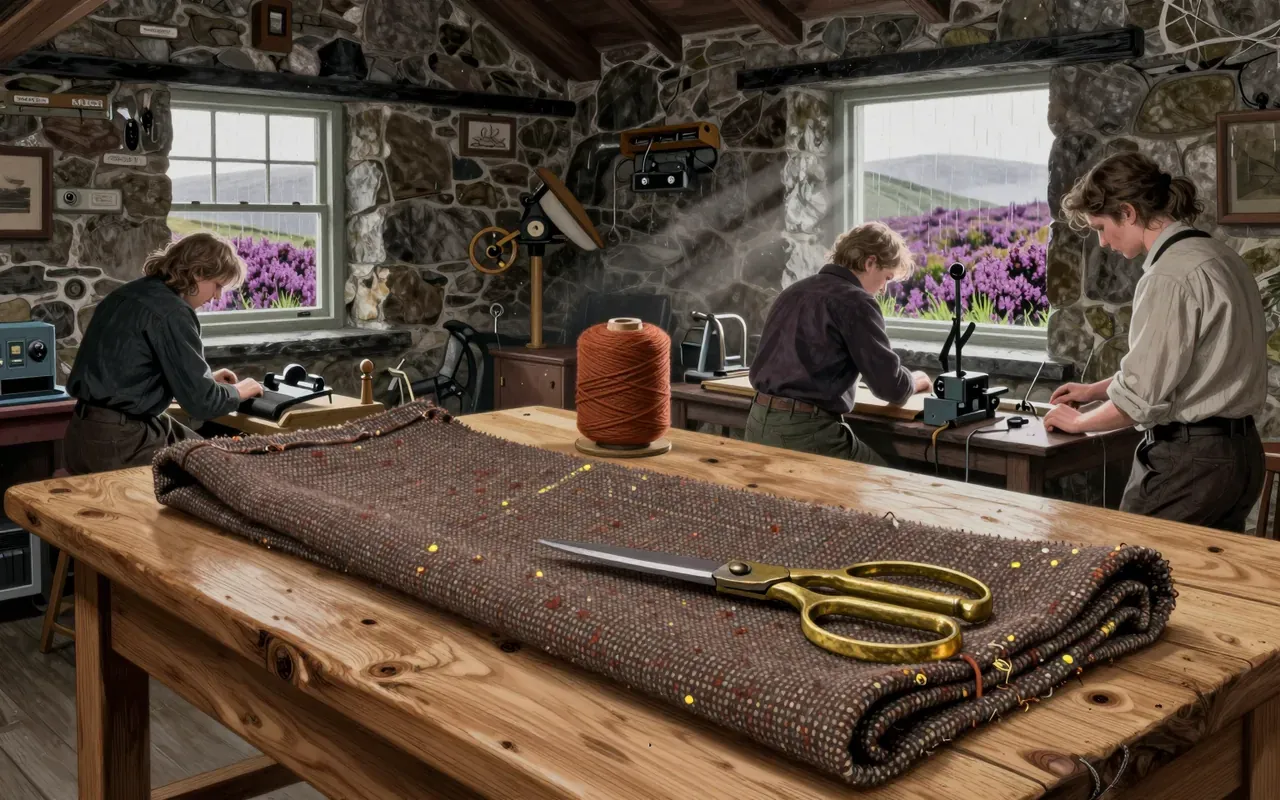
Donegal tweedDonegal tweed is a plain-weave wool fabric from County Donegal, Ireland. It was historically handwoven for caps, suits and vests using local materials. Its modern form dates to the 1880s. Machine weaving arrived in the 1950s–60s. It is best known for a plain-weave cloth with differently-coloured warp and weft and small, irregularly placed coloured yarns yielding a heathered effect. Magee, founded in 1866, became the largest and most famous producer. Such fabric is often labelled 'donegal' regardless of where it is made.
9:24
Polar fleecePolar fleece is a soft, napped, insulating polyester fabric developed by Malden Mills in Massachusetts in 1979. It was co-developed with Patagonia as Synchilla to mimic and surpass wool. Malden Mills CEO Aaron Feuerstein declined to patent it, enabling broad adoption. It is trademarked as PolarFleece since October 6, 1981. Its warmth depends on loft and trapped air pockets. Weight variants are defined in grams per square meter (gsm): micro, 100, 200, and 300. It is hydrophobic but loses insulation when wet. It generates static and sheds microfibres during washing and drying.
Up next in Fashion

The Row (fashion label)

Mary-Kate and Ashley Olsen · 2006 · 10:32

A luxury brand that launched without names, without interviews, and sold out—because the clothes refused to lie about what they were.

10:32