fashionbriefs
8:30in productionCh. 1 · How it’s built/ 8:30 · ceiling 15 min
Denim

Denim

Denim isn’t rebellious—it’s bureaucratic. It was issued by railways and air forces long before it was adopted by teenagers.

Denim is a functional textile whose cultural weight far exceeds its material origins. It was engineered for wear, not meaning. Its adoption by institutions preceded—and enabled—its symbolic use by generations who mistook durability for dissent.

Chapters & takeaways4
  1. 1:05
    How it’s built

    Denim’s structure—not its colour or brand—is what makes it distinct from other cotton fabrics.

  2. 2:23
    Where it landed

    It began in Nîmes, crossed the Atlantic by the 1850s, and was industrialised with rivets in 1873.

  3. 3:25
    Who wore it first

    Before youth culture claimed it, denim was standard issue for French railway workers and RAF mechanics.

  4. 4:42
    When it changed

    Its shift from utility to identity happened decisively in the 1950s and 1960s—not earlier, not later.

Worth your time?

Yes. Wear the whole thing.

4/ 5
What works
  • culture/fashion
  • culture/subcultures
  • culture/society
What does not
  • culture/movements-and-scenes
  • culture/generations
Wear it if
  • designers
  • historians
  • material-culture-researchers
Skip it if
  • casual-consumers
  • trend-forecasters
The written brief1 min read

What the thing is

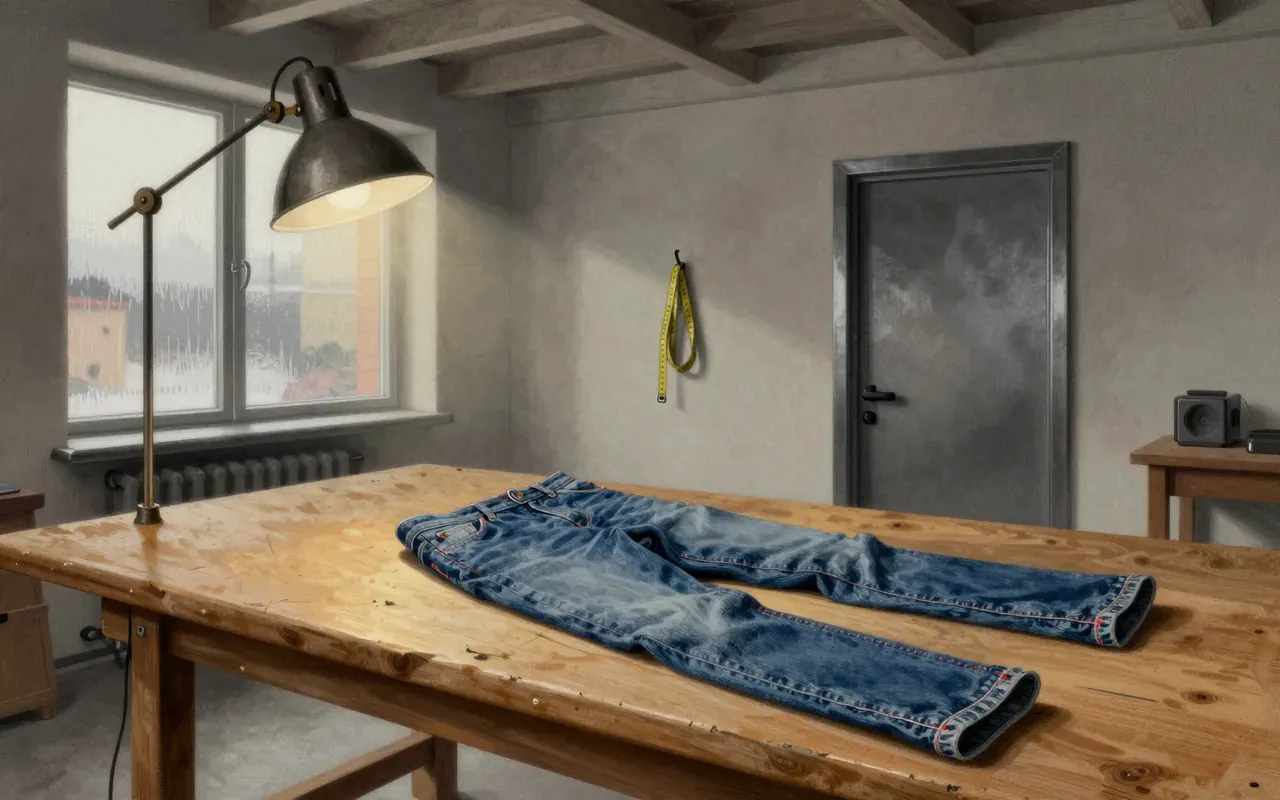
Denim is a warp-faced cotton twill textile with diagonal ribbing and indigo-dyed warp threads.

Where it came from

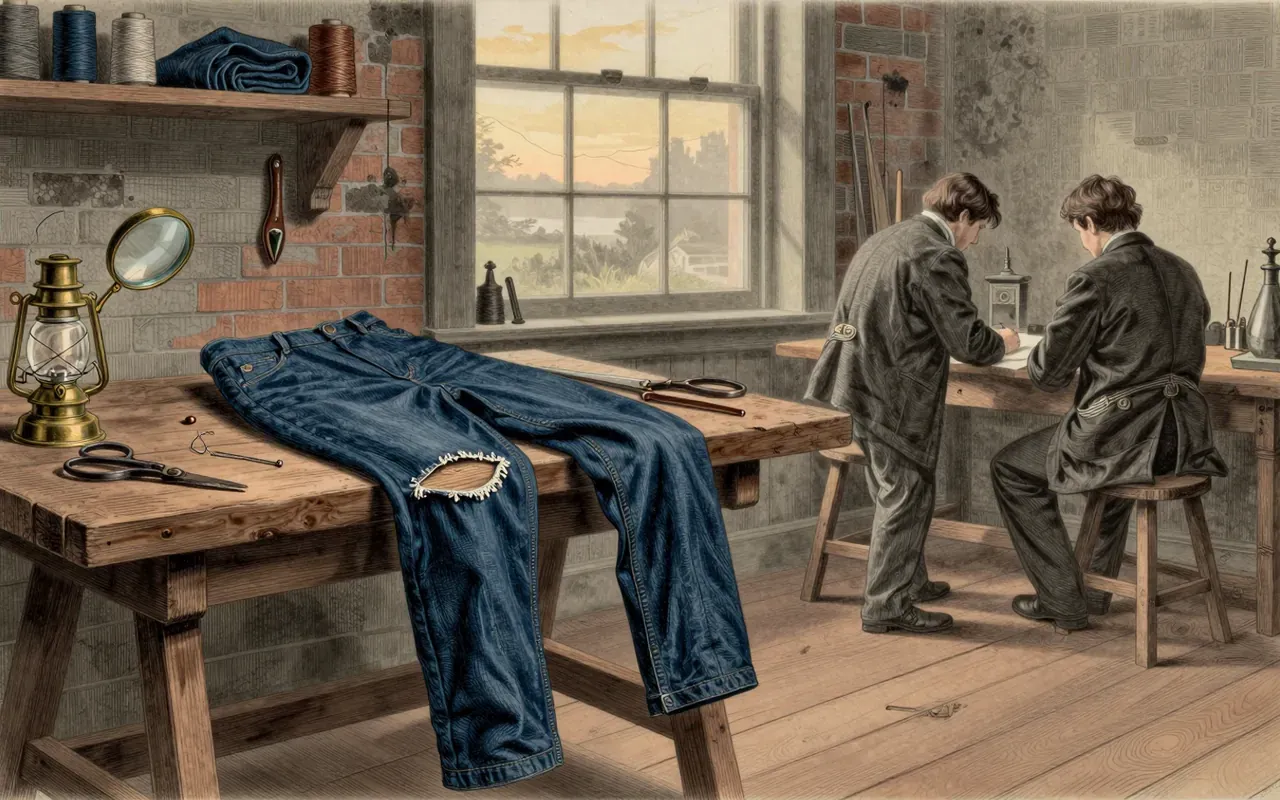
It was first produced in Nîmes, France. It entered the United States in the mid-19th century. Rivet-reinforced pants appeared in 1873.

What it gets right

It delivers durability through warp-faced twill and indigo ring-dyeing. It withstands abrasion. It fades predictably. It signals function before fashion.

What it gets wrong

It pretends to be democratic while relying on industrial standardisation, global supply chains, and post-hoc cultural appropriation. Its ‘rebellious’ image contradicts its origins in institutional uniformity.

Why it matters now

It anchors fast-fashion’s environmental cost ($57.3B global market in 2020) while still serving as raw material for subcultural signifiers—from RAF coveralls to metal battle jackets.

Is it worth your time

Yes—if you care how a fabric shaped labour, uniformity, rebellion and commerce without ever intending to.
Same rail · Denim4 of 4
9:41
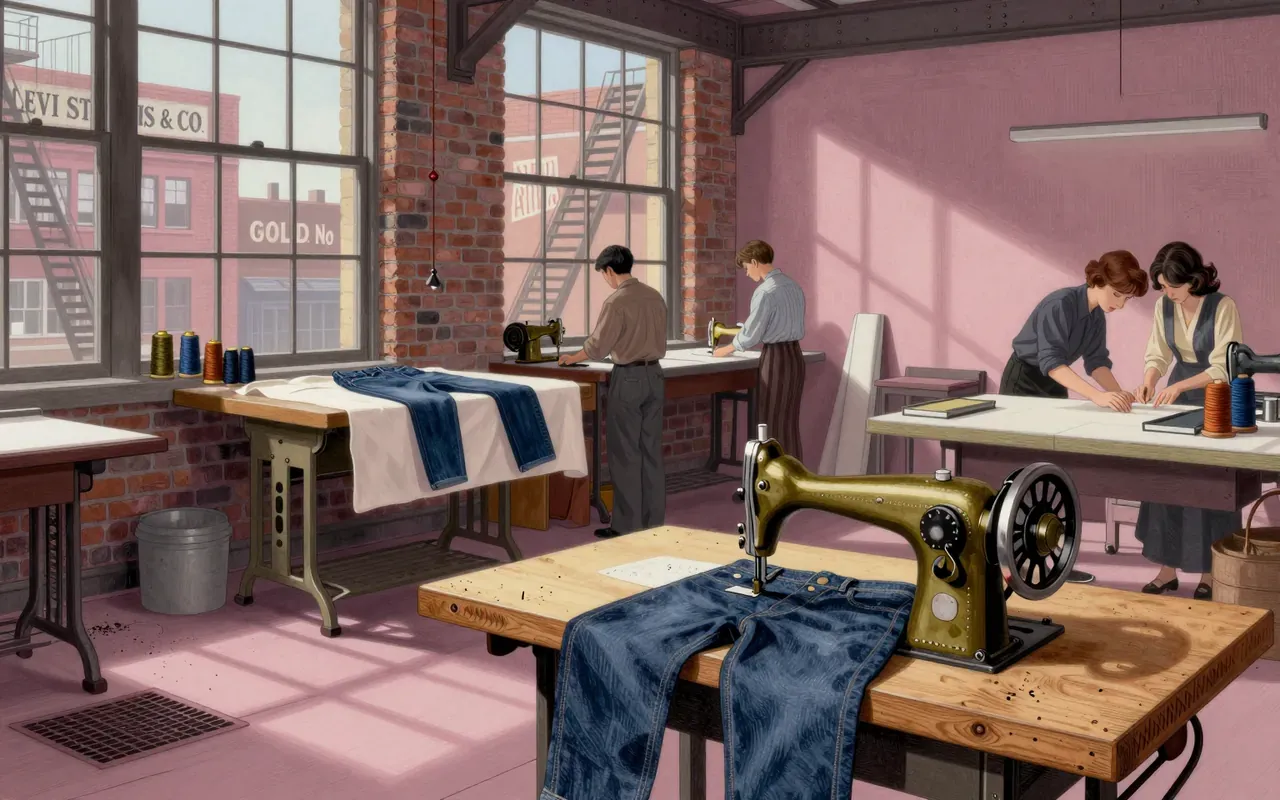
Levi Strauss & Co.1853Levi Strauss & Co. built its reputation on a single functional insight: reinforce stress points before they fail. Its garments do not flatter. They endure. They shrink. They evolve under constraint—not trend. The 501 is not a symbol. It is a specification.
9:28
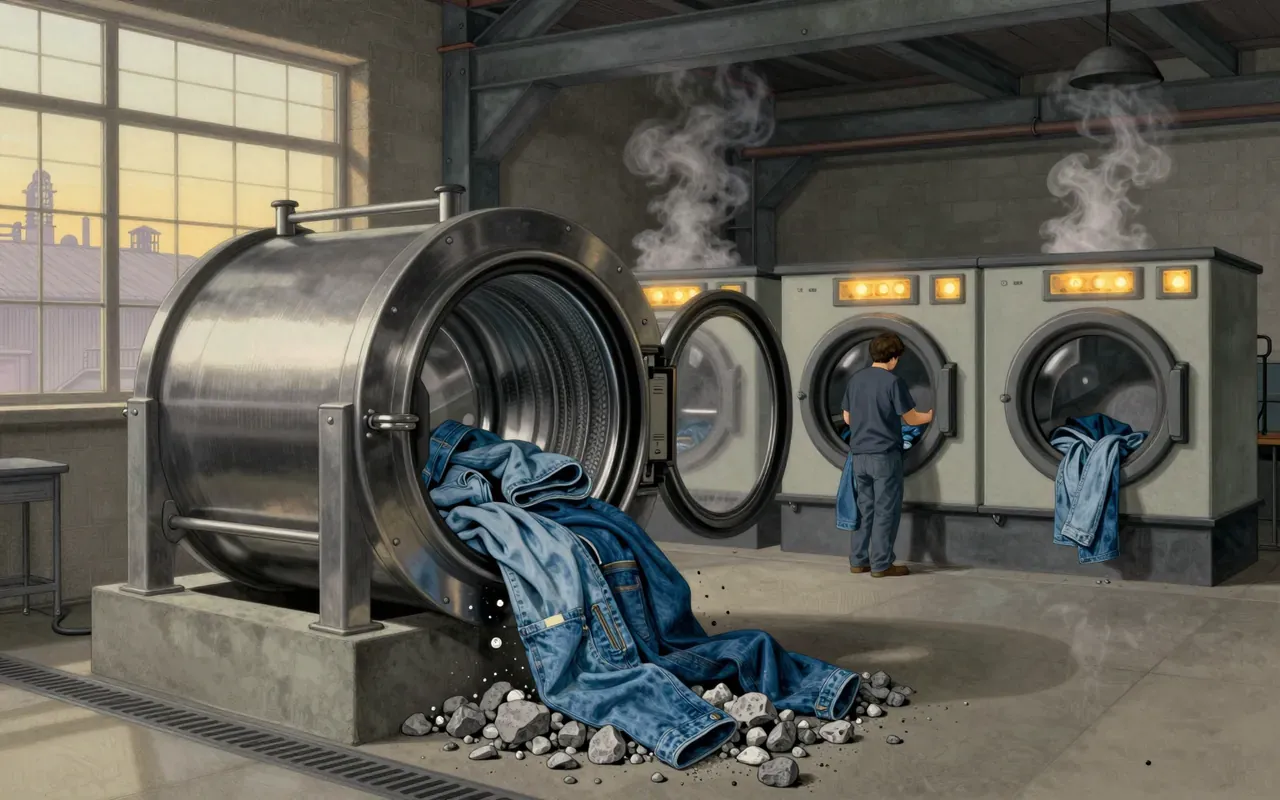
Stone washingStone washing is a pile finishing process used to give a newly manufactured cloth garment a worn appearance. It became popular in the 1980s, as acid jeans gained popularity; however, stone washing has roots going back to 1960s surfer apparel. Stone washing also helps to increase the softness and flexibility of otherwise stiff and rigid fabrics such as canvas and denim. Although stone washing increases a fabric's flexibility, it shortens the lifespan of the jeans. The process of stone washing can be costly, as freshly stone-washed jeans must be washed many times in order to remove the grit from the process. Along with high production costs, stone washing can be detrimental to the environment due to the excess grit that is removed as fabric is being stone washed. The process uses large stones to roughen up the fabric being processed. The garments are placed in a large horizontal industrial clothes washer that is also filled with large stones.
6:58
Acne Studios1996Acne Studios launched in 1996. Its first garment was raw denim jeans in 1997—100 pairs, red-stitched, given to friends and family. In 2017, it relaunched them as Blå Konst: six permanent styles, updated seasonally in fabric and cut, not form. The Face motif came later—proof the house built authority before playing with surface.
8:39
Diesel (company)1978Diesel jeans are low-riding, bell-bottomed, Italian-made denim. They began on a home sewing machine in 1978. They declare intent before fit.
Up next in Fashion

Dr. Martens

Klaus Märtens · 1951 · 9:02

Dr. Martens was invented for sore ankles — not punk, not protest, not fashion.

9:02