8:22in productionCh. 1 · How long is formal?/ 8:22 · ceiling 15 min
Garments
Evening gown
The evening gown was never about beauty. It was a uniform for proximity to power.
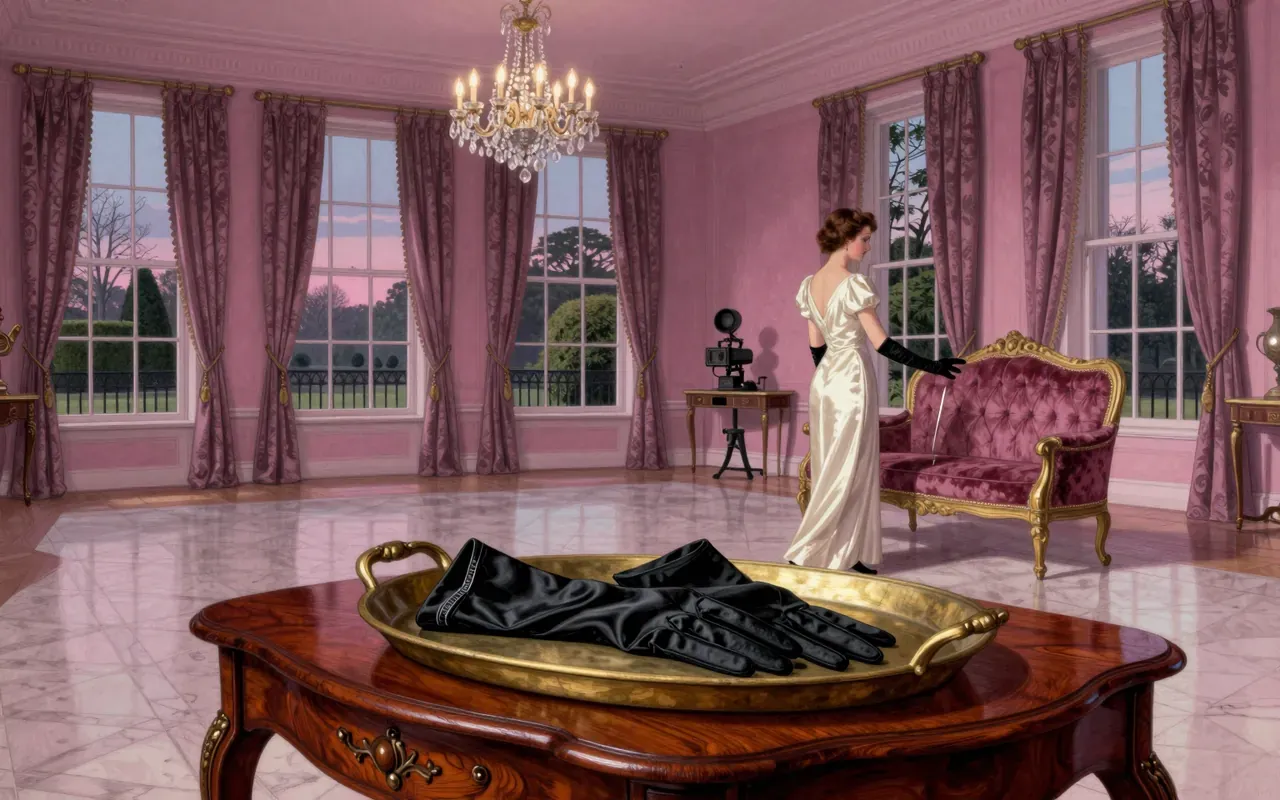
The evening gown is a long dress worn at formal occasions. It originated in the 15th-century Burgundian court as court dress. Ball or evening dress was synonymous with court dress during the early modern period. Evening gowns have varying lengths: ballerina, tea, or full-length. Such gowns are typically worn with evening gloves. Evening gowns are usually made of luxurious fabrics including chiffon, velvet, satin, organza, or silk. Silk is a popular fibre for many evening gowns. Evening gowns can be any silhouette—sheath, mermaid, fit and flare, A-line, or trumpet-shaped—and may have straps, halters or sleeves.
Length defines function: ballerina, tea, or full-length—all signal formality, not fashion.
2:39
Born at court
It began not as dress but as diplomacy: a tool of courtly influence under Philip the Good.
3:58
The grammar of luxury
Luxury fabric and evening gloves are not flourishes—they’re required syntax.
5:09
Not all gowns are equal
Unlike the ball gown, the evening gown permits sheath, mermaid, A-line—flexibility within formality.
Worth your time?
Yes. Wear the whole thing.
4/ 5
What works
establishes formal dress as social infrastructure
codifies visibility as eligibility
retains functional clarity across six centuries
What does not
define a decade
influence named designers
displace other formalwear systems
originate outside Burgundy
Wear it if
nobility first
then aspirational elites
now anyone who buys formalwear
Skip it if
working-class women in 15th-century Flanders
those excluded by cost or access
The written brief1 min read
What the thing is
An evening gown is a long dress worn at formal occasions.
Where it came from
It originated in the 15th-century Burgundian court as court dress, synonymous with ball dress among nobility.
What it gets right
It establishes clear visual grammar for formality: length, fabric, glove protocol, and silhouette variety all signal occasion and status.
What it gets wrong
It conflates ‘evening gown’ with ‘ball gown’, erasing the functional distinction: one is adaptable; the other is rigidly ceremonial.
Why it matters now
It remains the default template for ceremonial visibility—weddings, galas, red carpets—yet its origins in aristocratic exclusivity make every modern wearing a quiet negotiation of access.
Is it worth your time
Yes—if you care how formal dress codified power, then displaced it, then commodified its aura.