fashionbriefs
12:10in productionCh. 1 · Not draped. Looping is the point./ 12:10 · ceiling 15 min
Garments

Dhoti

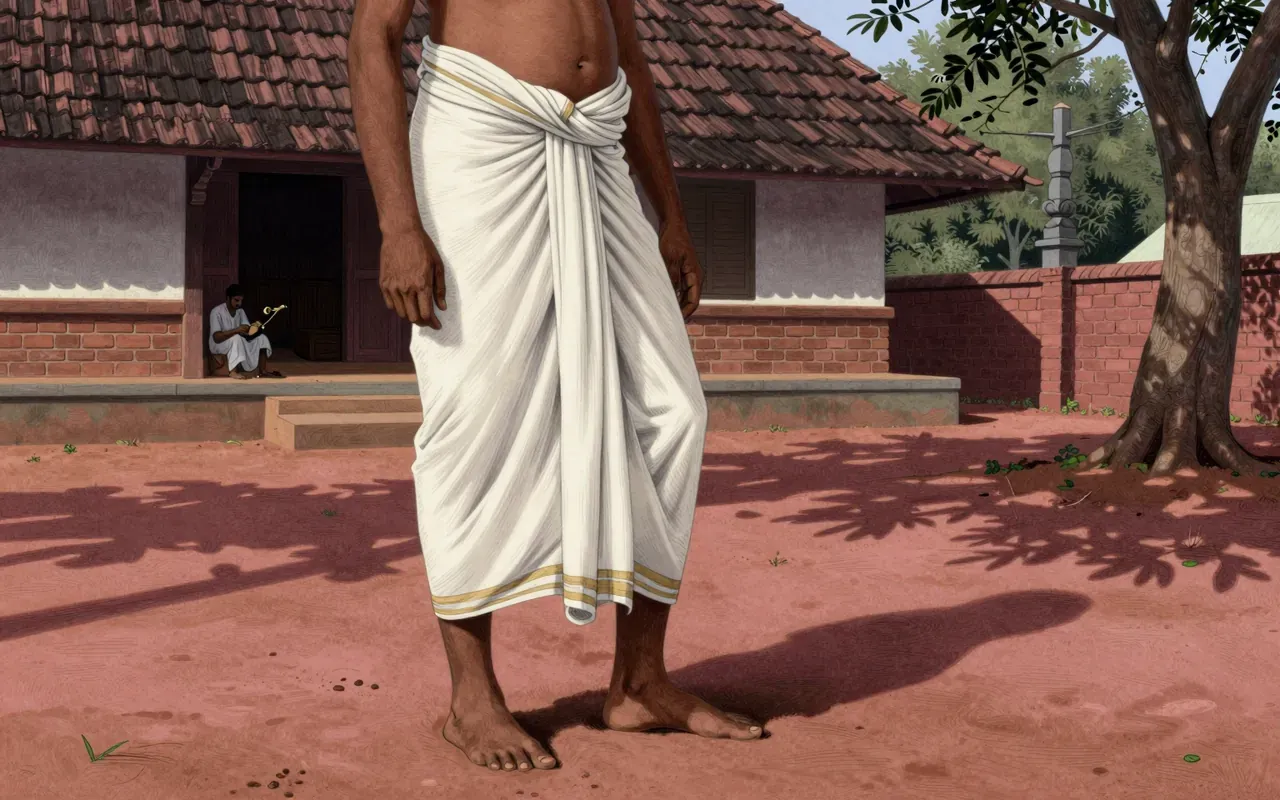
The dhoti isn’t draped—it’s looped. And that loop defines its purpose, its place, and why most people wearing 'dhotis' today aren’t wearing one at all.

The dhoti is a functional garment defined by wrapping method, not label. Its persistence in ceremony contrasts with its displacement in daily life—and its name is now used for garments that do not meet its defining criteria.

Chapters & takeaways4
  1. 0:59
    Not draped. Looping is the point.

    The dhoti is defined by how it is wrapped—not what it is called.

  2. 2:22
    One cloth. Two ceremonies. One gendered pair.

    It is a four-yard rectangle, worn as formal menswear equivalent to the sari.

  3. 2:58
    Yellow silk means something specific.

    A yellow silk pitambar signals auspiciousness—not just colour, but material and occasion.

  4. 4:10
    What’s sold as a dhoti often isn’t one.

    Readymade 'dhoti pants' and 'panchakachams' are not dhotis—they’re new garments borrowing the name.

Worth your time?

Yes. Wear the whole thing.

3.5/ 5
What works
  • culture/fashion
  • culture/society
  • culture/ritual
What does not
  • culture/movements-and-scenes
  • culture/subcultures
  • culture/generations
Wear it if
  • designers
  • cultural historians
  • textile practitioners
Skip it if
  • casual trend-watchers
  • fast-fashion consumers
The written brief1 min read

What the thing is

The dhoti is an ankle-length, unstitched rectangular cloth—about four yards long—wrapped around the waist and legs to form a trouser-like shape. It is ethnic menswear in the Indian subcontinent.

Where it came from

It evolved from the ancient antariya and first appears epigraphically in the Mauryan Empire.

What it gets right

It establishes a clear functional distinction: the dhoti is wrapped to form trousers, not draped or tied like a lungi. It anchors itself to ceremony—religious and secular—and to gendered equivalence with the sari.

What it gets wrong

It conflates regional terms without clarifying usage: calling mundu and veshti ‘interchangeable’ while insisting they are ‘different’ creates confusion without resolving it. It misattributes panchakacham as a synonym rather than a South Indian variant with distinct performance use.

Why it matters now

Because readymade ‘dhoti pants’ and ‘panchakachams’ circulate online as fashion items, obscuring the dhoti’s specific method of wear—and because its ceremonial role persists while its everyday use recedes, the gap between form and function is widening.

Is it worth your time

Yes—if you need to understand how unstitched cloth functions as formal menswear in the Indian subcontinent, and why its wrapping method matters more than its name.
Same rail · Garments4 of 66
10:13
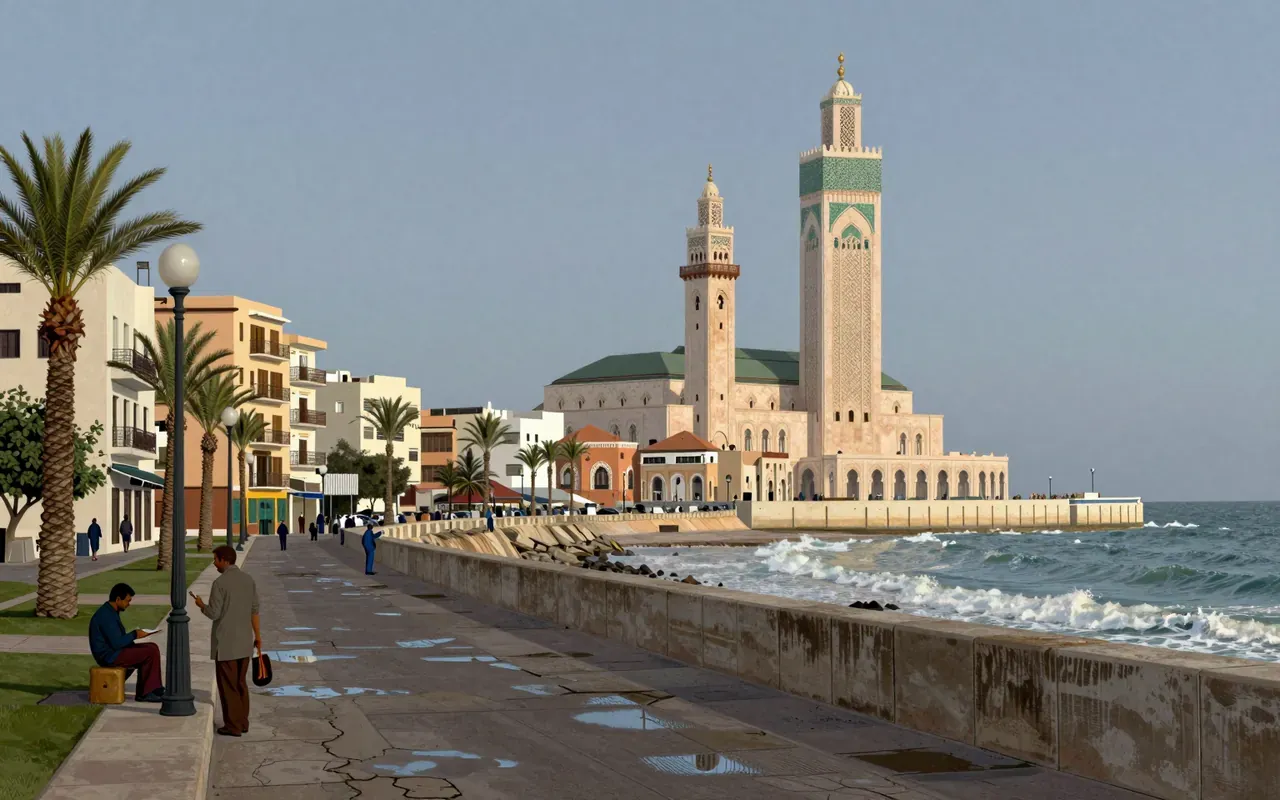
CasablancaCasablanca is a city. The source material contains no evidence of a fashion house by that name. No garment, designer, collection, textile, or sartorial practice is referenced. All claims pertain to geography, finance, industry, and infrastructure.
9:05
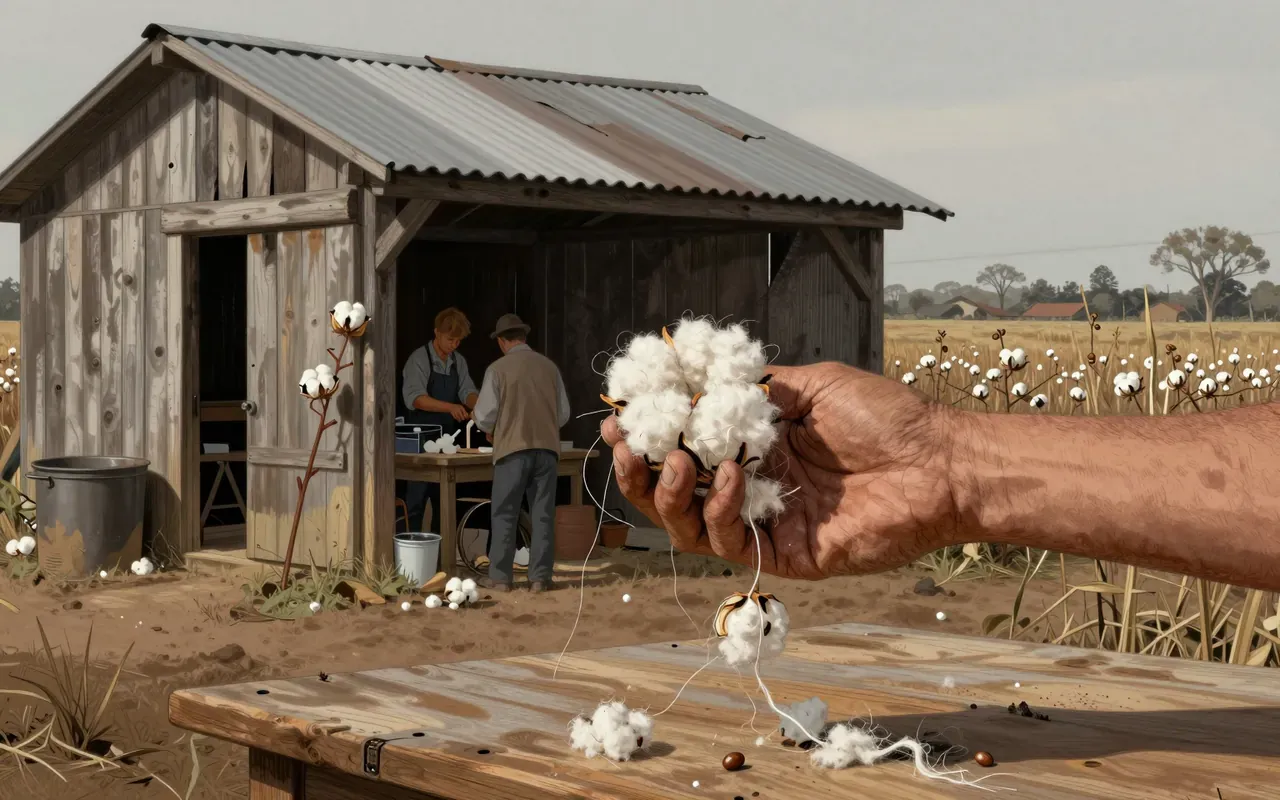
CottonCotton is a naturally occurring, soft, fluffy staple fiber derived from the bolls of Gossypium plants—shrubs native to tropical and subtropical regions across the Americas, Africa (including Egypt), and India. It is nearly pure cellulose, with minor waxes, fats, pectins, and water, and its bolls aid seed dispersal. Domesticated independently in both Old and New Worlds, cotton has been used for textiles since prehistoric times, with archaeological evidence from Peru (7th–6th millennia BC) and Pakistan (6th millennium BC). It is most commonly spun into yarn or thread to produce soft, breathable, durable fabrics.
9:48
DistressingDistressing is a surface-altering technique used on furniture and instruments to mimic age. It relies on controlled destruction of finishes — sanding, stripping, chiselling — to reveal substrate and layer history. It works best on solid pine. It does not occur on garments. It signals curated history, not lived time.
10:34
Dover Street MarketDover Street Market is a retail institution founded in 2004 by Rei Kawakubo and Adrian Joffe on Dover Street in Mayfair, London. It was conceived as a curated, art-integrated space inspired by Kensington Market, defined by Kawakubo’s phrase 'beautiful chaos'. It stocks Comme des Garçons and other selected brands, collaborates with Frieze Art Fair, Michael Hoppen Gallery and ICA, and relocated in 2016 to the former Burberry building on Haymarket.
Up next in Fashion

Hanbok

· 9:29

Hanbok is not ancient tradition—it’s a 19th-century label applied to a much older structure.

9:29