fashionbriefs
8:21in productionCh. 1 · Not a resurrection/ 8:21 · ceiling 15 min
Accessories

Swatch

1983

Swatch didn’t save Swiss watchmaking—it outsourced its soul to plastic and price.

Swatch was a Swiss industrial reset disguised as a fashion object. It worked—but only by abandoning the values it claimed to defend.

Chapters & takeaways4
  1. 0:51
    Not a resurrection

    Swatch is a Swiss company, founded in 1983—not a revival, but a new entity built from industry salvage.

  2. 1:56
    A counter-offensive, not a manifesto

    It was a tactical response to Japanese competition and digital watches—not a philosophical stance on timekeeping.

  3. 3:11
    The price was the product

    CHF 50 wasn’t arbitrary: it made analog watches disposable, desirable, and democratically priced.

  4. 4:58
    Launch as logistics

    Twelve models launched on 1 March 1983 in Zürich—with one million units targeted before year-end.

Worth your time?

Yes. Wear the whole thing.

3.5/ 5
What works
  • as a case study in brand-led industrial triage
  • as a template for national cultural repositioning
What does not
  • art-deco
  • avant-garde
  • pop-art
Wear it if
  • designers
  • marketers
  • economic historians
Skip it if
  • horologists
  • collectors
  • craft advocates
The written brief1 min read

What the thing is

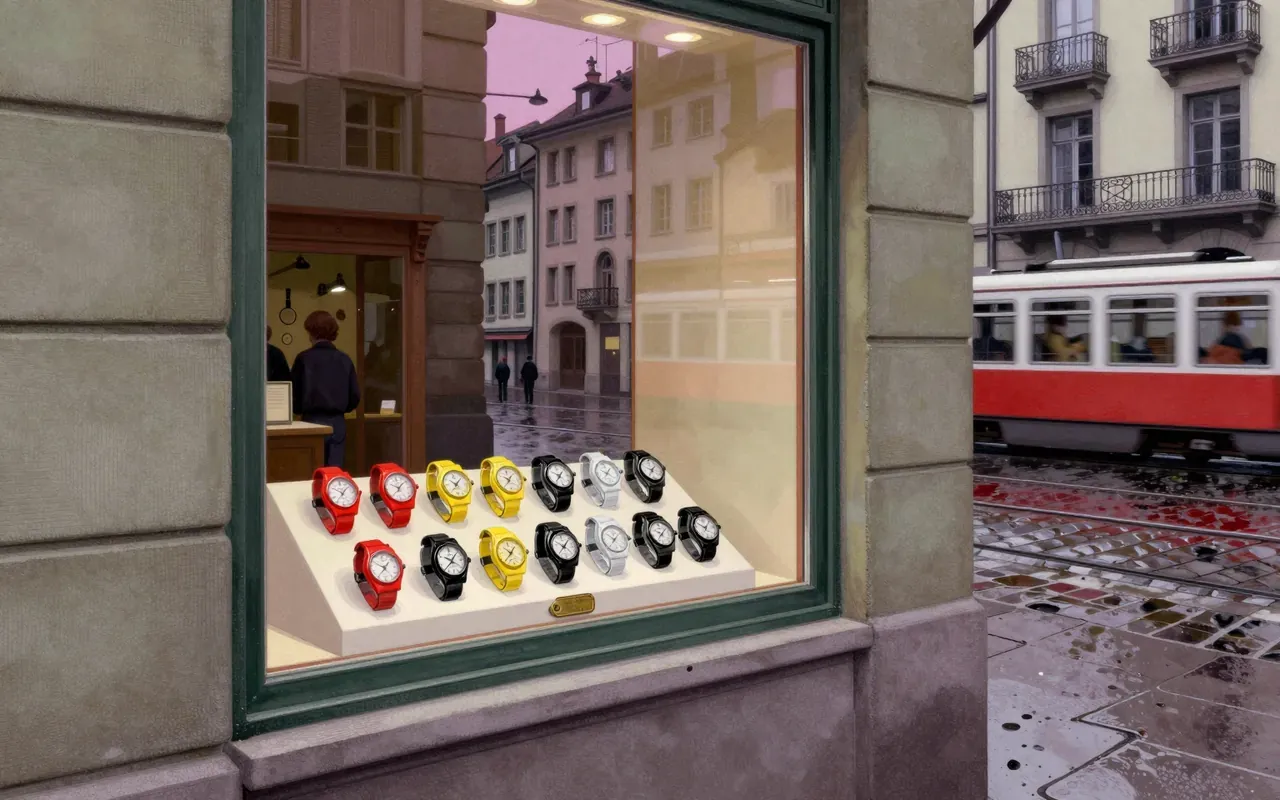
Swatch is a Swiss watch brand launched in 1983. It sells plastic-cased, battery-powered, analog quartz watches.

Where it came from

Swatch emerged from a Swiss industry coalition responding to the quartz crisis. It was founded in 1983 by Ernst Thomke, Elmar Mock, and Jacques Müller. It launched in Zürich.

What it gets right

Swatch reasserted Swiss watchmaking’s relevance by making analog watches affordable, playful, and mass-producible. It targeted the entry-level market directly. It responded to digital dominance with deliberate analog charm.

What it gets wrong

It did not solve the quartz crisis for mechanical watchmakers. It displaced craft with plastic, not precision. Its CHF 50 price point was a marketing anchor—not a sustainable model for horological innovation.

Why it matters now

Swatch reveals how national industrial identity gets repackaged as lifestyle product. Its success shows what happens when engineering pragmatism meets branding rigour—and why that formula still defines fast fashion, tech accessories, and ‘heritage’ consumer goods.

Is it worth your time

Yes—if you care how industrial strategy becomes cultural shorthand.
Same rail · Accessories4 of 19
8:40
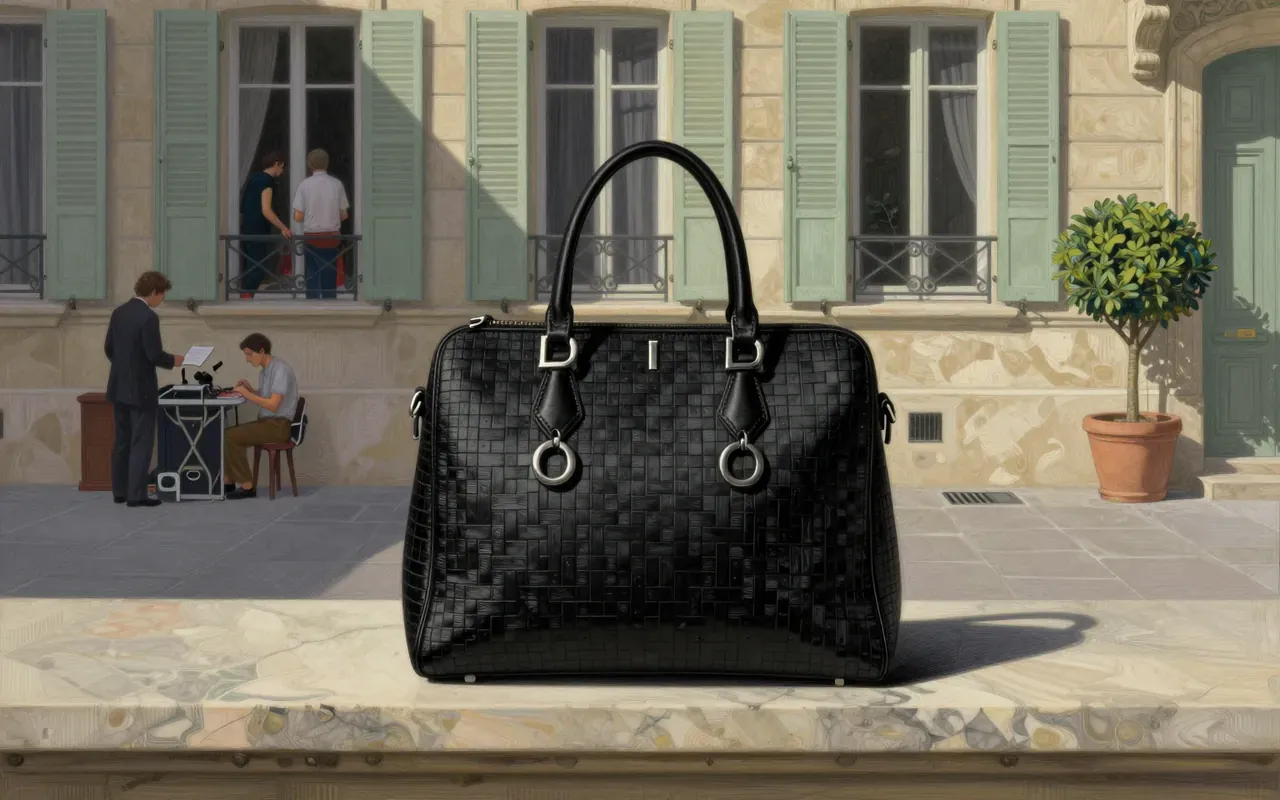
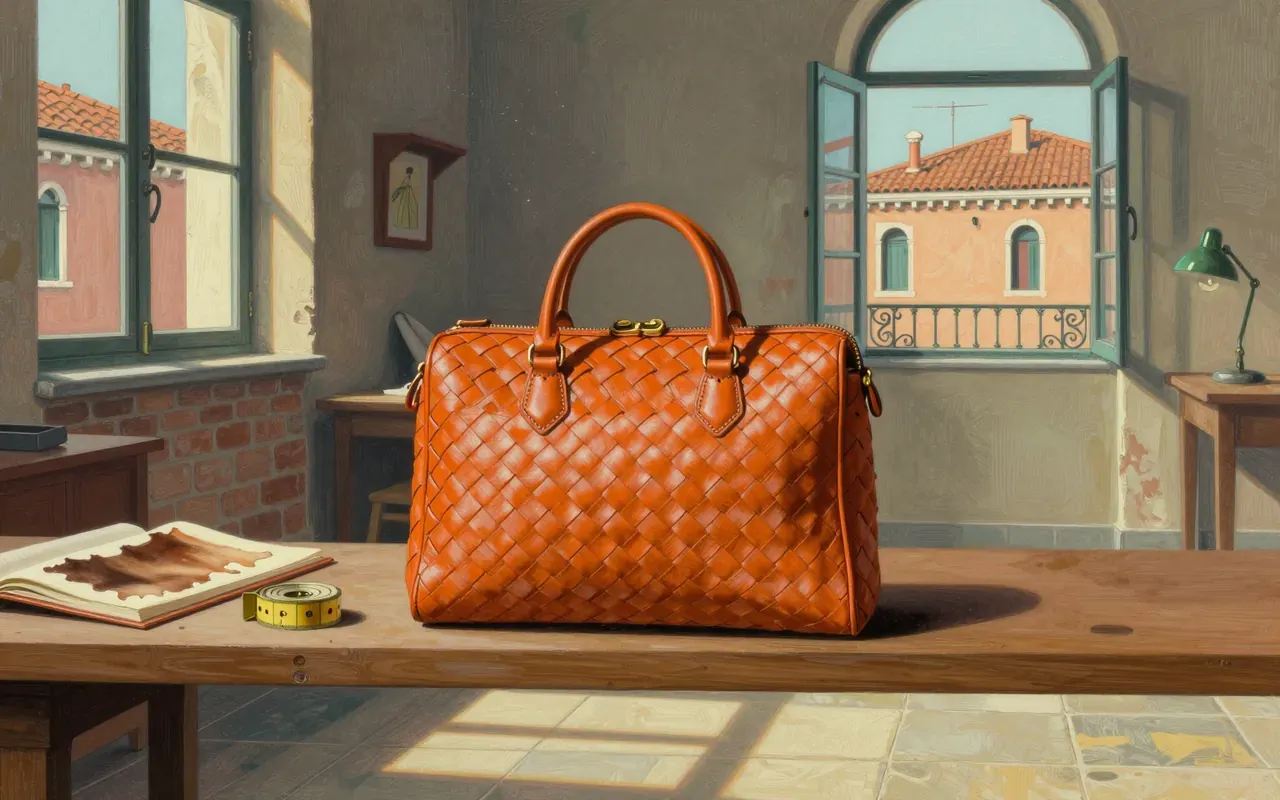
Bottega Veneta1966Bottega Veneta (1966) is defined by Intrecciato: a leather weaving technique that interlaces strips through slits. It is not clothing. It is structural. It trades seamlessness for resilience. It demands attention to making—not just wearing.
9:35
G-Shock1983The G-Shock is not fashion. It is infrastructure for the wrist.
11:16
Lady DiorThe Lady Dior is a handbag named commercially by Christian Dior to honor Diana, Princess of Wales. Designed by Gianfranco Ferré in 1994, it was first called Chouchou, then Princesse, before being renamed Lady Dior. Commissioned by Bernadette Chirac for Diana’s 1995 Paris visit, it was presented in black at the Cézanne exhibition inauguration at the Grand Palais. Diana carried it publicly in Birmingham, Argentina, and on several further occasions. Its cannage motif derives from Napoleon III chairs and a neo-Louis XVI medallion armchair in Dior’s Avenue Montaigne mansion. The bag comprises 144 pieces, is rectangular and rigid, and features D-I-O-R letter charms and the Dior logo on the handle. It is produced in numerous materials including leather, velvet, microfiber, satin, denim, python, crocodile, tweed, and jacquard. Two hundred thousand units were sold in two years, increasing Dior’s leather goods turnover tenfold.
11:05
Dior Saddle bagThe Dior Saddle bag is a 1999 John Galliano creation that fused equestrian form with Lauryn Hill’s 1998 music video styling. It debuted in October 1999 during Dior’s Spring/Summer 2000 show. Commentators described it as a radical departure — 'funky, streetwise and cool'. It uses hand-stitched piping and comes in denim and leather. Dior did not confirm speculation about Helmut Newton’s influence, though early campaigns leaned into sensuality.
Up next in Fashion

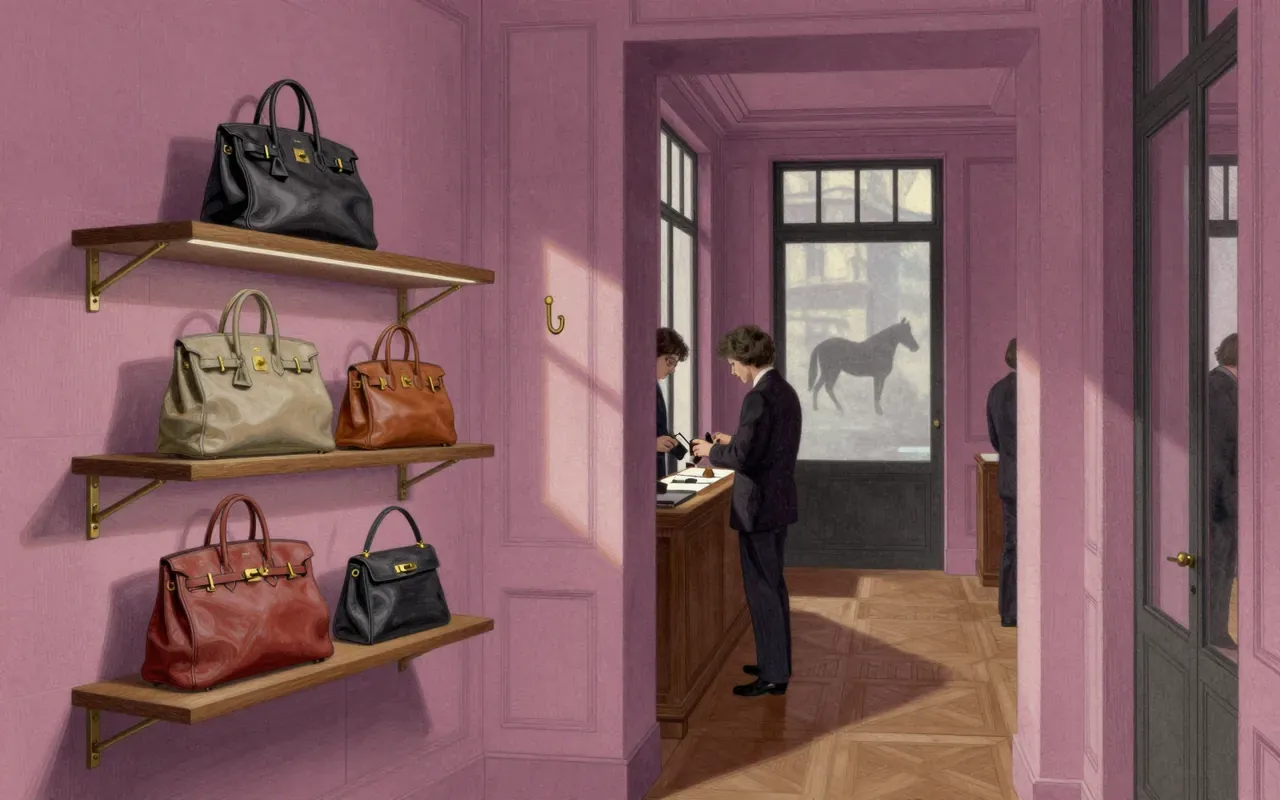
Birkin bag

Hermès · 8:44

A bag designed for diapers became a trophy no one can carry — and no one is meant to.

8:44