fashionbriefs
8:48in productionCh. 1 · Template, not textile/ 8:48 · ceiling 15 min
Tailoring · Workwear

Pattern (sewing)

A pattern is not clothing—it is the bureaucracy of cloth.

A pattern is a reductive, reproducible plan—not a garment, not a sketch, not a sample. It is paper that carries geometry, not intention. Its value lies in fidelity to shape, not expression.

Chapters & takeaways4
  1. 0:55
    Template, not textile

    A pattern is a paper intermediary—traced, not worn.

  2. 1:57
    From block to batch

    Slopers anchor fit; grading scales it—no new drafting needed.

  3. 3:33
    Butterick to bedroom

    Retail patterns are tissue-paper kits: overlapping sizes, printed instructions, ready for home use.

  4. 5:25
    The verb behind the sheet

    Patternmaking is the discipline—not the paper, but the act of reducing volume to line.

Worth your time?

Yes. Wear the whole thing.

4.5/ 5
What works
  • fixes geometry
  • standardises symbols
  • enables grading
  • separates design from execution
What does not
  • drapes
  • breathes
  • adjusts for posture
  • accounts for fabric recovery
Wear it if
  • home sewers
  • pattern cutters
  • technical designers
Skip it if
  • freehand drapers
  • zero-waste improvisers
The written brief1 min read

What the garment is and where it came from

A pattern is not a garment. It is a tool: a flat, reductive intermediary between idea and cloth. It originated as a commercial product—not a craft aid—but became foundational to both home sewing and industrial fashion production.

How it works, in terms someone would actually use

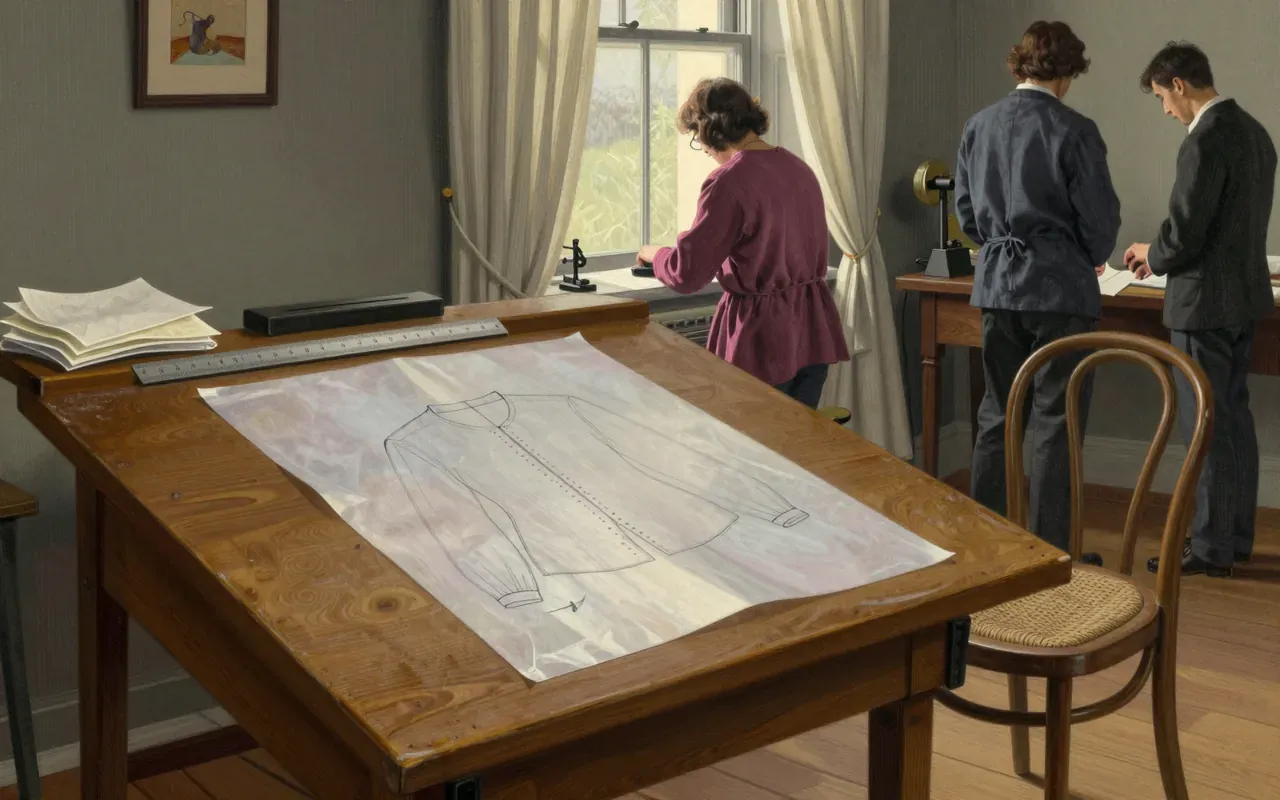
A pattern is a paper template. You trace its edges onto fabric before cutting. It guides where seams go, where darts fall, and how pieces join. Paperboard or cardboard versions hold up to repeated tracing. Retail patterns use tissue paper with overlapping sizes and an illustrated instruction sheet.

What it gets right

It fixes geometry. It translates three-dimensional form into two-dimensional shapes. It standardises symbols—darts, notches, grainlines—so a single diagram communicates construction logic across languages and decades. It separates design intent from execution.

What it does not

A pattern does not drape. It does not breathe, stretch, or shift with movement. It does not account for grain distortion, bias pull, or fabric recovery. It contains no seam allowance unless marked. It cannot adjust for posture, asymmetry, or weight distribution without manual fitting.

What it changed

Butterick launched the first commercial pattern system in 1863. That shifted garment construction from bespoke draping or measuring to standardised, reproducible templates. It enabled mass home sewing and later, factory-scale production workflows.

Who it is for, and who it is not

It is for makers who need repeatable, scalable garment parts: home sewers using Butterick or Simplicity patterns; pattern cutters grading a size set; technical designers digitising for marker making. It is not for those who work only by draping, improvising, or zero-waste cutting without templates.

Is it worth your time

Yes—if you cut fabric yourself. It saves time over draping on the body. It enables replication, grading, and industrial marker making. It does not replace fit testing or fabric behaviour knowledge.
Same rail · Tailoring4 of 37
9:10
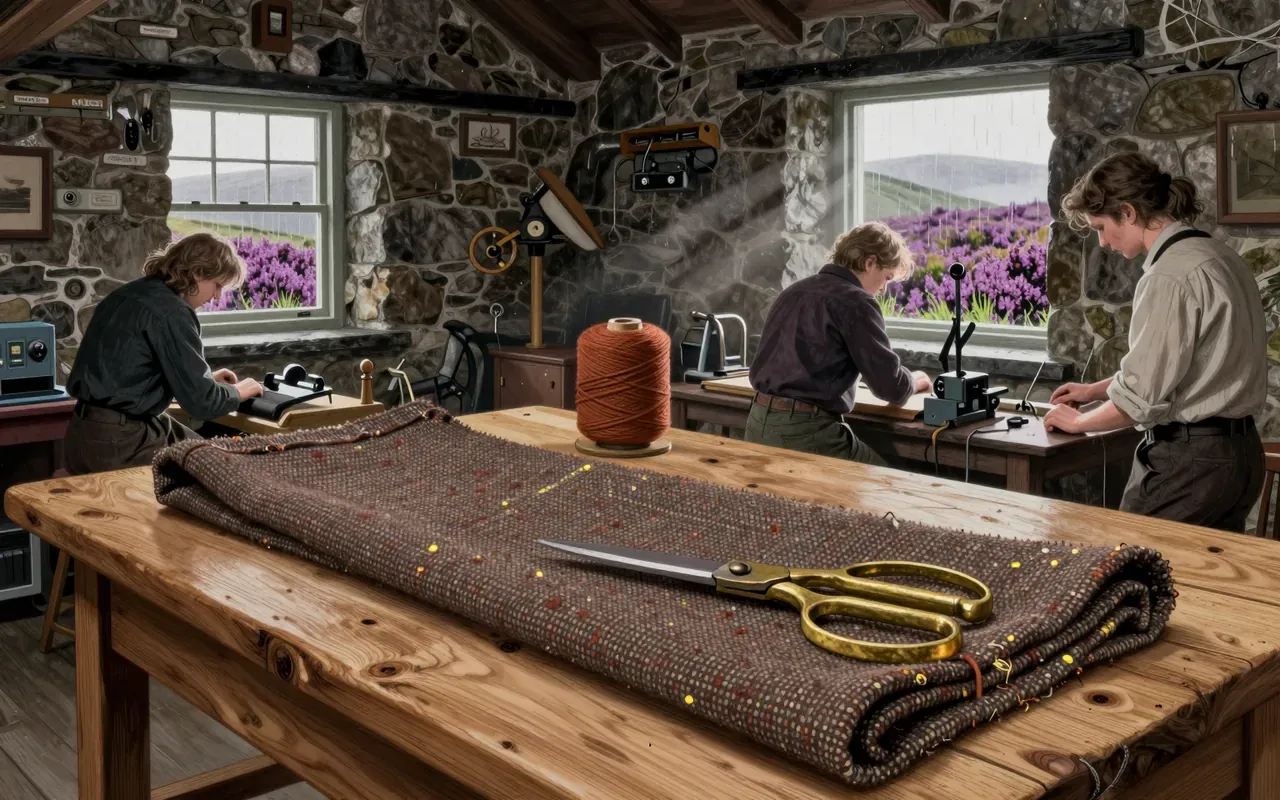
Donegal tweedDonegal tweed is a plain-weave wool fabric from County Donegal, Ireland. It was historically handwoven for caps, suits and vests using local materials. Its modern form dates to the 1880s. Machine weaving arrived in the 1950s–60s. It is best known for a plain-weave cloth with differently-coloured warp and weft and small, irregularly placed coloured yarns yielding a heathered effect. Magee, founded in 1866, became the largest and most famous producer. Such fabric is often labelled 'donegal' regardless of where it is made.
9:00
Kiton1968Kiton is a vertically integrated Italian luxury house founded in 1968 in Arzano. Its bespoke tailoring relies exclusively on hand-cut and basted construction. Five owned factories specialise: Biella (fabrics), Collecchio (leather and bomber jackets), Fidenza (knitwear), Marcianise (jeans), and Arzano (coats, jackets, shirts, ties, shoes, small leather goods). No claim is made about design innovation, seasonal collections, celebrity wearers, or cultural impact. The model is operational, not aesthetic.
8:10
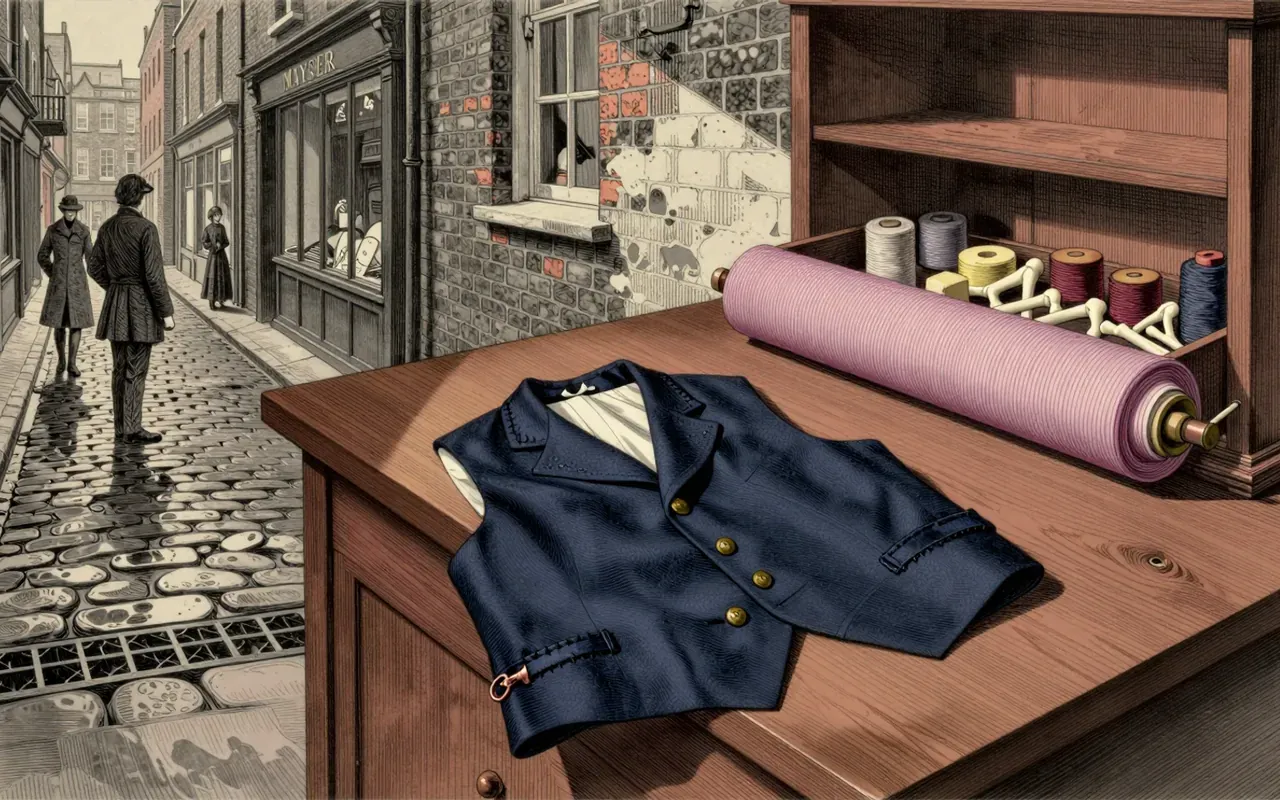
The Waistcoat1882A literary depiction of impoverished Warsaw life in 1882, centred on a waistcoat whose physical alterations reveal a reciprocal act of compassion between a dying husband and his wife — reconstructed by the narrator through observation and acquisition.
10:55
Grace Wales BonnerWales Bonner is a London-based menswear label founded in 2014. Its garments fuse tailoring and sportswear through deep cultural research. It has collaborated with Adidas since 2020, producing 25 sold-out sneakers. It curated exhibitions at the Serpentine Gallery (2019) and MoMA (2023). It was appointed creative director of Hermès menswear in 2025, with its first collection due January 2027.
Up next in Fashion

Paul Smith (fashion designer)

· 11:27

Tailoring that remembers it has eyes.

11:27